 NK Mehta
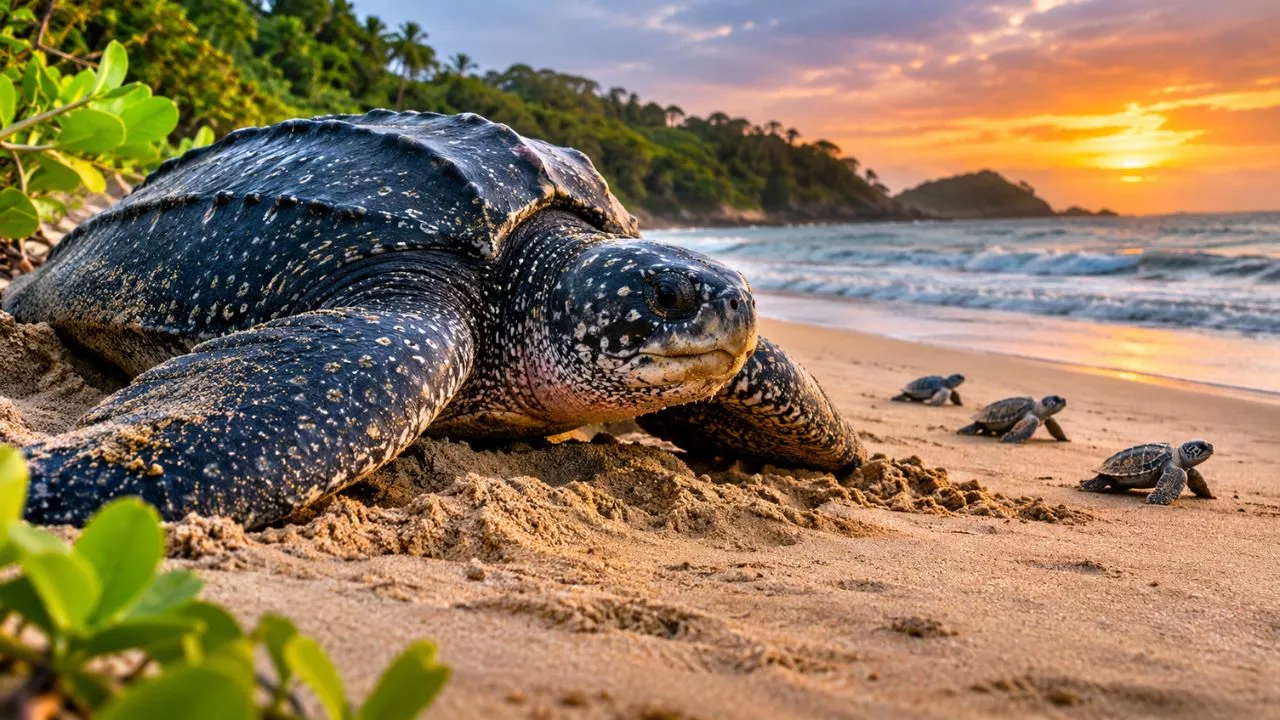
Leatherback turtles in Ecuador are giving marine scientists something they rarely get: good news. During the 2025–2026 nesting season, researchers recorded a record number of eastern Pacific leatherback nests on several Ecuadorian beaches. These beaches lie more than 1,600 kilometres (about 1,000 miles) south of the species’ main nesting grounds in Mexico and Costa Rica.
For decades, a female leatherback crawling onto an Ecuadorian beach was an unusual sight. Now, however, the pattern seems to be shifting. Researchers believe the world’s largest sea turtle may be adjusting to a warming ocean by moving its nesting activity to cooler coastlines.
What the New Study on Ecuador’s Leatherbacks Found
The research, published in the journal Chelonian Conservation and Biology, looked back across more than 45 years of records from Ecuador’s coast. The team examined sightings of breeding-age females, nests, nesting attempts, hatching success and strandings. They then compared that activity with El Niño and La Niña cycles, which drive warmer and cooler sea surface temperatures.
The results were striking. Nest yields, meaning the number of eggs in each nest, matched those at the traditional northern nesting grounds. Likewise, hatch rates were comparable, and some Ecuadorian nests even produced more hatchlings than expected. In short, these beaches are not just stopovers. They appear to be genuinely productive nesting sites.
Why a Warming Pacific May Be Pushing Leatherbacks South
Climate change is reshaping the ocean that leatherbacks depend on. Warm El Niño events, which climate change is making more intense, have long been linked to poor nesting years for this population. Consequently, cooler coastlines could become increasingly valuable as refuges.
The La Niña Connection
Over the last decade, nesting activity in Ecuador rose during La Niña periods. These cold episodes cool the southeastern tropical Pacific. For a turtle that needs the right sand temperature to incubate its eggs, that cooler window may make all the difference.
Notably, the eastern Pacific leatherback is the only sea turtle that handles both warm and cold waters well. Each year, it travels thousands of miles from tropical beaches to subpolar feeding grounds, where it feasts on jellyfish in summer. That flexibility may explain why it can shift nesting sites when conditions change.
Eastern Pacific Leatherbacks at a Glance
The table below sums up the key facts behind this story.
| Fact | Details |
|---|---|
| Species | Eastern Pacific leatherback (Dermochelys coriacea) |
| Conservation status | Critically endangered in the eastern Pacific; vulnerable globally |
| Population decline | More than 90% since the 1980s |
| Estimated population | Fewer than 1,000 individuals |
| Traditional nesting grounds | Mexico and Costa Rica |
| Record season in Ecuador | 2025–2026 nesting season |
| Records reviewed in study | More than 45 years of coastal data |
| Main diet | Jellyfish |
Meet Bella: A Turtle Who Refused to Give Up
One female, nicknamed Bella by researchers, shows how determined these animals can be. In January 2026, she came ashore at Playa de Crucita under moonlight. Bright streetlamps confused her, though, and she climbed over a rock breakwater onto a sidewalk. Unable to nest, she returned to the sea still carrying her eggs.
Two nights later, Bella tried again on a quieter stretch of sand. This time, she laid 47 eggs, and 44 hatchlings later made it to the surf. Researchers had tagged her on that first attempt, so they could follow her season closely. She went on to nest four to five times in 2026 alone. Altogether, 134 of her 146 eggs hatched, a success rate of 91.8 per cent.
The Threats Leatherback Turtles in Ecuador Still Face
Despite this hopeful trend, the population remains in serious danger. Some experts warn the eastern Pacific leatherback could vanish within about 60 years without stronger action. The main threats include:
- Fishing bycatch, especially turtles caught in gillnets used by small-scale fleets
- Plastic pollution, which leatherbacks can mistake for jellyfish
- Vessel strikes in busy coastal waters
- Egg harvesting from nests on unprotected beaches
- Loss of nesting habitat, including artificial lighting that disorients females
- Warming El Niño events intensified by climate change
What Comes Next for Leatherback Conservation
Bella’s story highlights a simple point: protecting Ecuador’s beaches now matters more than ever. Researchers are calling for ongoing monitoring, bycatch reduction and better coastal zone management. In addition, they stress that local communities and traditional ecological knowledge should help shape these efforts.
Practical steps could make a real difference. For instance, dimming or shielding beachfront lights would help nesting females find their way. Similarly, hatcheries such as the one at San Jacinto can protect vulnerable clutches. Ecuador’s sudden importance as a nesting site gives conservationists a valuable, if narrow, window to act.