 NK Mehta
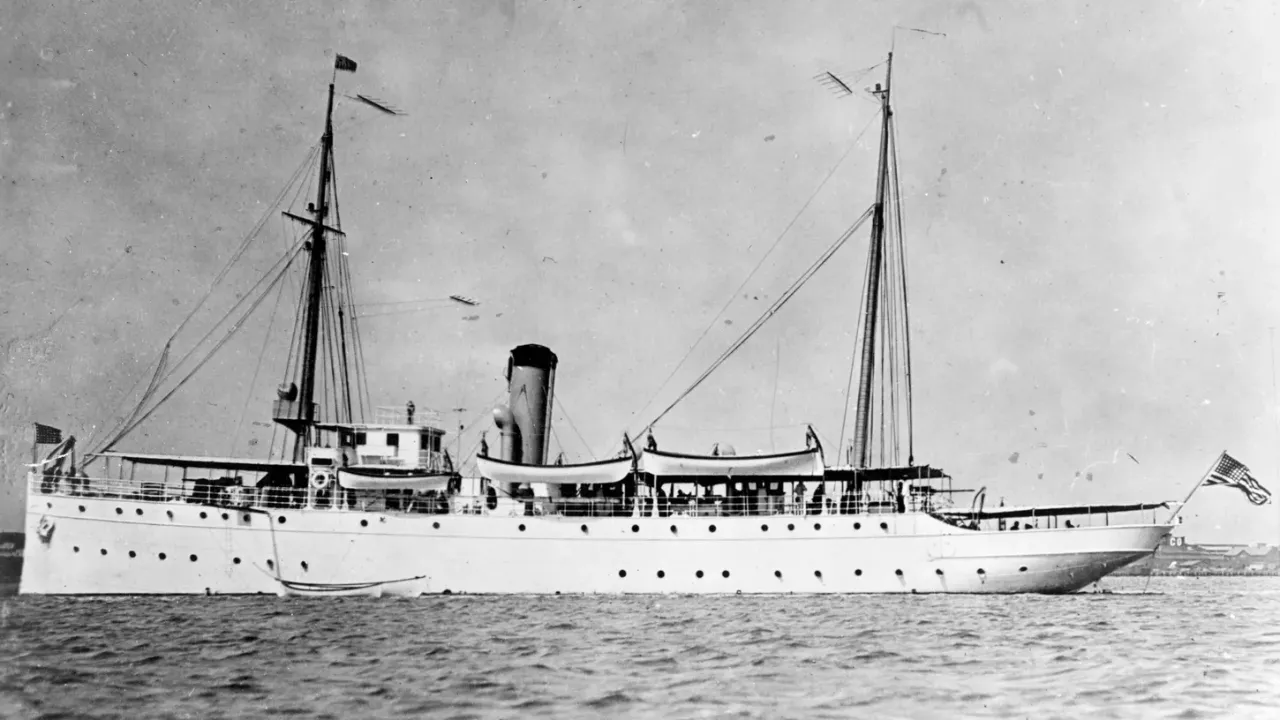
For more than a century, the USCGC Tampa rested somewhere beneath the cold Atlantic, its exact location unknown. Now, the USCGC Tampa wreck has finally been found off the coast of Cornwall, England. As a result, a long-overlooked chapter of Black military history is returning to public view. Among the 131 people lost when the cutter sank in 1918 were 11 Black Coast Guardsmen. Their story deserves far more attention than history has given it.
What Happened to the USCGC Tampa in 1918?
The Tampa was a 190-foot U.S. Coast Guard cutter. During World War I, it joined the convoy fleet that escorted merchant ships between Gibraltar and the United Kingdom. These waters were dangerous because German U-boats hunted Allied shipping constantly.
On September 26, 1918, the Tampa was operating in the Bristol Channel. That night, the German submarine UB-91 fired a torpedo that struck the cutter amidships. Within about three minutes, the ship had disappeared beneath the waves. Not one person survived.
The loss came just weeks before the war ended in November 1918. In fact, it remains the largest single combat loss of U.S. naval forces during the entire conflict. When the Tampa failed to reach port, a search plane went looking. The next day, it spotted only scattered debris.
Who Was on Board? A Look at the Crew
The Tampa carried a remarkably diverse crew for its time. The men came from many regions of the United States, and some were immigrants from countries such as Russia and Norway. British personnel were also aboard.
| Detail | Information |
|---|---|
| Vessel | USCGC Tampa (190-foot cutter) |
| Date sunk | September 26, 1918 |
| Attacker | German submarine UB-91 |
| Time to sink | About 3 minutes |
| Total lost | 131 people (no survivors) |
| U.S. Coast Guardsmen | 111 |
| U.S. Navy personnel | 4 |
| British personnel and civilians | 16 |
| Black crew members | 11 |
| Purple Heart awarded | 1999 (posthumously, to all crew) |
| Wreck located | 2026, about 50 miles off Newquay, Cornwall |
| Depth | More than 300 feet |
The 11 Black Sailors Who Made Coast Guard History
Eleven of the men lost on the Tampa were Black. In 1999, roughly 81 years after the sinking, every crew member was posthumously awarded the Purple Heart. Consequently, these 11 men became the first uniformed minority Coast Guardsmen to die in combat and receive that honor.
One of them was Francis LeRoy Wilkes, a 21-year-old seaman. His family knew him affectionately as “Uncle Frank.” For years, a relative has worked to piece together Wilkes’s life and legacy. That kind of family research matters, because the personal stories of many Black servicemen from this era were never properly recorded.
Here is why their story is so significant:
- They served during deep segregation. Black Americans in 1918 faced widespread discrimination at home, yet they still served their country at sea.
- They died in combat. Their deaths placed them among the first Black Coast Guardsmen killed in action.
- Their honor came late. Recognition arrived only in 1999, decades after most of their relatives had passed away.
- Their families are still being traced. The wreck’s discovery has renewed efforts to find living descendants.
How Divers Found the USCGC Tampa Wreck
The discovery came from Gasperados, a British volunteer technical diving team. The group works alongside historians and researchers to locate wrecks around the UK coast. Their search for the Tampa lasted about three years and involved multiple trips to possible sites.
Eventually, the team located a wreck roughly 50 miles off Newquay, Cornwall, at a depth of more than 300 feet. Confirming its identity, however, required careful work. The U.S. Coast Guard supplied historical records, technical data and archival images. Using these, experts matched features such as deck fittings, weaponry and the ship’s bell.
The Coast Guard announced the find in spring 2026. Furthermore, it is now planning further exploration of the site using robotics and autonomous underwater systems.
Why This Discovery Matters for Black History
World War I stories often receive far less attention than those from World War II. Black contributions to the Great War are even more overlooked. Therefore, finding the Tampa gives historians, families and communities a concrete place to anchor this memory.
The discovery also offers something deeply human: closure. For descendants, knowing where their ancestors rest can be profoundly meaningful. Similarly, it reminds us that Black Americans have been part of every chapter of the nation’s military story, even when official records kept them in the margins.
Ultimately, the Tampa’s crew reflected an America that was more diverse than its institutions often admitted. Their shared fate at sea, regardless of race or origin, makes their story a powerful one to tell today.
Frequently Asked Questions
1. When was the USCGC Tampa wreck found?
The wreck was located in 2026 by the British volunteer dive team Gasperados, more than 108 years after the ship sank.
2. How many Black sailors died on the USCGC Tampa?
Eleven Black Coast Guardsmen died when the Tampa sank on September 26, 1918.
3. Why are the Tampa’s Black sailors historically important?
They became the first uniformed minority Coast Guardsmen to die in combat and receive the Purple Heart, awarded posthumously in 1999.
4. Where is the USCGC Tampa wreck located?
It lies more than 300 feet deep, about 50 miles off Newquay, Cornwall, in the United Kingdom.