 NK Mehta
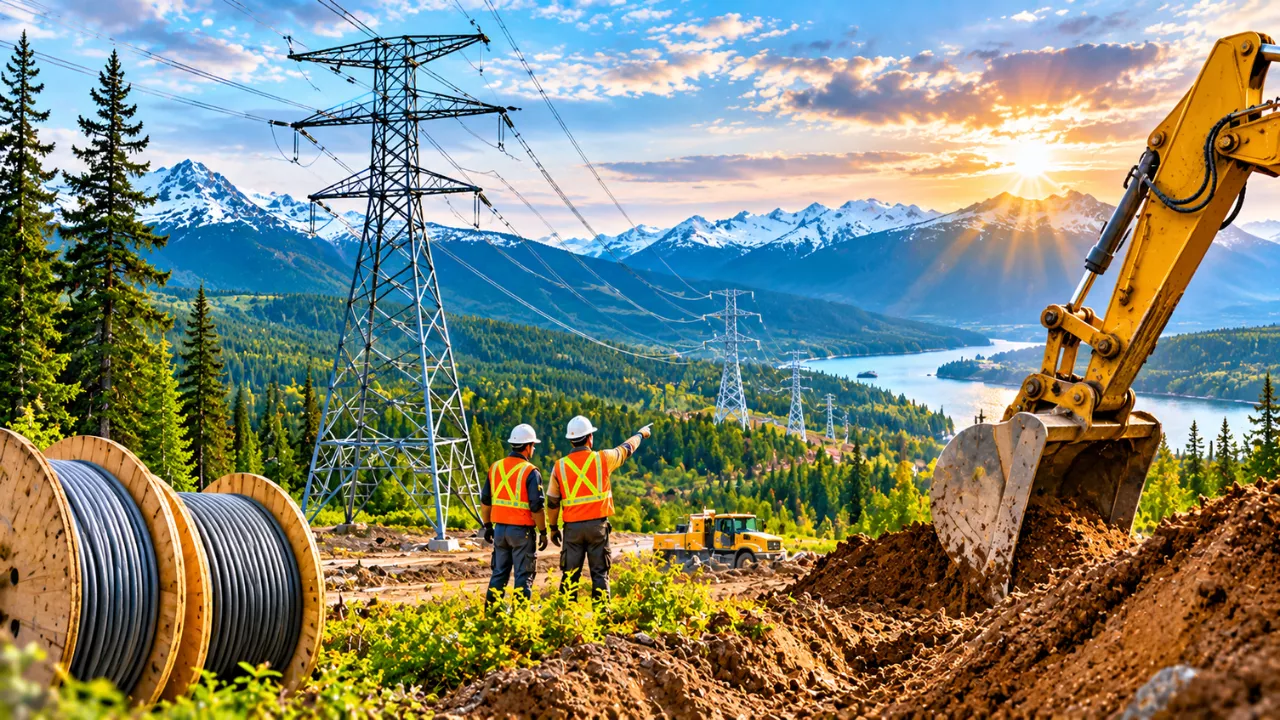
Construction is officially underway on the North Coast Transmission Line, one of the most important energy projects in western Canada right now. On September 3, 2026, federal and provincial leaders gathered in Prince George, British Columbia, to mark the start of Phase 1. The project will expand the existing high-voltage line between Prince George and Terrace. As a result, northern B.C. could soon have far more clean electricity available for homes, industry and new resource projects.
What Is the North Coast Transmission Line?
The North Coast Transmission Line (NCTL) is a large-scale upgrade to the power grid serving northwest British Columbia. Today, the region has limited transmission capacity. That constraint has slowed down new mines, processing plants and export facilities that need reliable electricity.
The first phase focuses on a 165-kilometre stretch of 500-kilovolt line. It will run from the Williston Substation near Prince George to the Glenannan Substation near Fraser Lake. Later phases are expected to carry the expansion further west toward Terrace.
Once the full line is complete, the government expects it to:
- More than double the supply of clean, low-cost electricity along Canada’s West Coast
- Support major projects such as the Ksi Lisims LNG facility
- Open the door to critical minerals development in the Golden Triangle region
- Generate about $10 billion in new economic activity
- Create close to 10,000 jobs
How the Project Is Being Funded
Money for the North Coast Transmission Line comes from several sources. In addition, the project benefits from close cooperation between Ottawa and Victoria.
In July 2026, the two governments signed the Canada–British Columbia Cooperative Prosperity Agreement. Under this deal, they committed $3.9 billion toward Phases 1 and 2. Earlier, in November 2025, the Canada Infrastructure Bank gave BC Hydro a $139.5 million loan. That money covered early work such as engineering, route clearing and First Nations consultations. Meanwhile, roughly $44.2 million from the First and Last Mile Fund is supporting related upgrades to BC Hydro’s existing northwest transmission system.
Key Facts at a Glance
| Detail | Information |
|---|---|
| Groundbreaking date | September 3, 2026 |
| Location | Prince George, British Columbia |
| Phase 1 length | 165 km |
| Voltage | 500 kV |
| Phase 1 route | Williston Substation to Glenannan Substation (near Fraser Lake) |
| Federal-provincial commitment | $3.9 billion (Phases 1 and 2) |
| Canada Infrastructure Bank loan | $139.5 million to BC Hydro |
| Expected economic activity | About $10 billion |
| Expected jobs | Nearly 10,000 |
| Emissions cut | Up to 3 million tonnes per year |
| First Nations ownership | Up to 50% co-ownership opportunity |
Why the North Coast Transmission Line Matters for Emissions
Perhaps the most striking number tied to this project is its climate impact. Officials estimate the line could cut greenhouse gas emissions by up to three million tonnes every year. To put that in perspective, it’s roughly the same as removing one million vehicles from the road annually.
The reason is simple. Without grid access, many industrial sites in remote areas rely on diesel generators or natural gas for power. By contrast, B.C. draws most of its electricity from hydro. Therefore, connecting these sites to the provincial grid replaces fossil fuel power with cleaner sources.
Indigenous Partnership and the Northwest Corridor
Indigenous participation is a central part of this project. First Nations will have the chance to co-own up to half of the new transmission line. This model gives communities a long-term financial stake rather than a one-time benefit.
Furthermore, the NCTL was referred to the federal Major Projects Office on November 13, 2025. It now serves as the backbone of the proposed Northwest Critical Conservation Corridor. This corridor stretches across northwest B.C. and into the Yukon. Its goals include:
- Supporting Indigenous project leadership
- Lowering energy costs for local residents and businesses
- Expanding transport and telecommunications links
- Protecting conservation areas in the region
At the groundbreaking, leaders from the Lheidli T’enneh First Nation described the moment as a fresh start for the region. They also stressed the importance of protecting natural habitats as construction moves forward.
How This Fits Canada’s Bigger Energy Plan
The North Coast Transmission Line is one piece of Canada’s National Electricity Strategy. That plan aims to double the size of the country’s power grid by 2050. According to federal estimates, the strategy could save Canadians up to $15 billion in energy costs by mid-century. It may also lower total energy bills for about seven in ten households.
Canada already starts from a strong position. It has the lowest residential electricity prices in the G7 and one of the highest shares of clean power generation. Still, demand is rising quickly from electric vehicles, data centres and heavy industry. For that reason, new transmission lines like this one are essential to keep power both affordable and reliable.
Frequently Asked Questions
What is the North Coast Transmission Line?
It’s a major expansion of the high-voltage power line between Prince George and Terrace in British Columbia. It is designed to deliver more clean electricity to northwest B.C.
When did construction start?
Phase 1 construction officially began on September 3, 2026, with a groundbreaking event in Prince George.
How long is the first phase?
Phase 1 covers 165 kilometres of 500 kV line, from the Williston Substation near Prince George to the Glenannan Substation near Fraser Lake.
Will First Nations own part of the line?
Yes. First Nations have the opportunity to co-own up to 50 percent of the new transmission line.