 NK Mehta
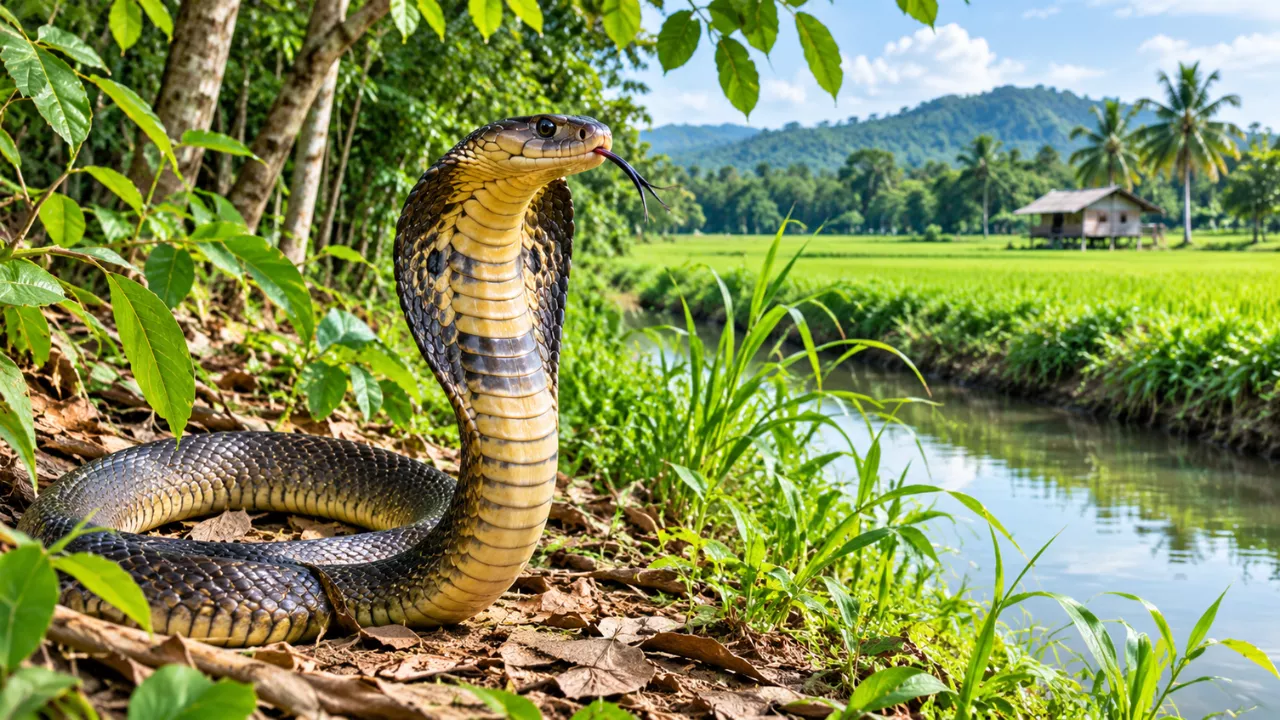
King cobras in Thailand are facing a quiet but serious problem. As farms replace forests, the world’s longest venomous snake is finding it harder to move freely. Research from Northeast Thailand shows these snakes cut back their movement once they enter farmland. Instead, they cling to small patches of forest and strips of vegetation along irrigation canals. For a predator that normally travels long distances, this shift says a lot about how farming is reshaping wildlife habitat.
Where the King Cobra Research Took Place
The work was carried out at the Sakaerat Biosphere Reserve in Nakhon Ratchasima province. This area combines protected forest with a busy farming zone around it. Crops such as corn and sugar cane cover much of the land. In addition, the surrounding zone holds about 159 villages and a four-lane highway linking the region to Bangkok. As a result, the reserve offers a clear picture of how a large snake copes when wild land meets human activity.
How Researchers Tracked King Cobras in Thailand
Scientists fitted the snakes with radio transmitters and followed them on a regular schedule. This allowed them to map each cobra’s path across both forest and farmland. They then compared those paths with nearby features, including:
- Forest areas, the least disturbed habitat in the region
- Roads and settlements, which bring risks like vehicle strikes and conflict with people
- Water bodies and semi-natural areas, which offer cover and prey
- Scrubby field edges, disused plots and canal banks with natural vegetation
What the Study Found About King Cobra Movement
The results were striking. King cobras moved more freely inside forests. However, their movement dropped once they reached agricultural areas. In farmland, the snakes tended to stay within vegetated pockets, often along irrigation canals. Interestingly, roads and villages did not consistently push them away. In other words, king cobras will stay close to danger as long as some usable habitat remains nearby.
| Landscape Type | King Cobra Behaviour | Conservation Value |
|---|---|---|
| Protected forest | Wider, more active movement | Core habitat |
| Forest fragments | Used as refuges within farmland | High |
| Canal-side vegetation | Snakes stay here while in farm zones | High |
| Open crop fields | Movement reduced, little use | Low |
| Roads and villages | No consistent avoidance seen | Risk zones |
Why Canal-Side Vegetation Matters So Much
Earlier tracking work in the same reserve showed these snakes use large home ranges. On average, tracked cobras used close to 500 hectares and moved roughly 180 metres a day. Several of them made regular use of farm areas, especially irrigation canals. Therefore, the strips of scrub along canals act like lifelines. They give the snakes shade, shelter and hunting grounds in an otherwise open landscape. Without them, the farm zone would offer almost nothing a king cobra needs.
The Human-Snake Conflict Problem
Living near people comes at a cost. A related study in the reserve followed 23 king cobras over four years. During that time, 14 of them died, many linked to human causes. Surveys of local residents also revealed strong fear of snakes. Consequently, keeping habitat in farmland is only half the challenge. Reducing fear and conflict is just as important.
What This Means for King Cobra Conservation
These findings point to practical steps that could help. Protecting forest fragments and leaving natural vegetation along canals would give snakes safer routes. Moreover, community education could reduce unnecessary killings. Planners can also treat farmland as part of the habitat rather than a dead zone. Ultimately, the king cobra’s future in Thailand may depend on small green spaces that are easy to overlook.