 NK Mehta
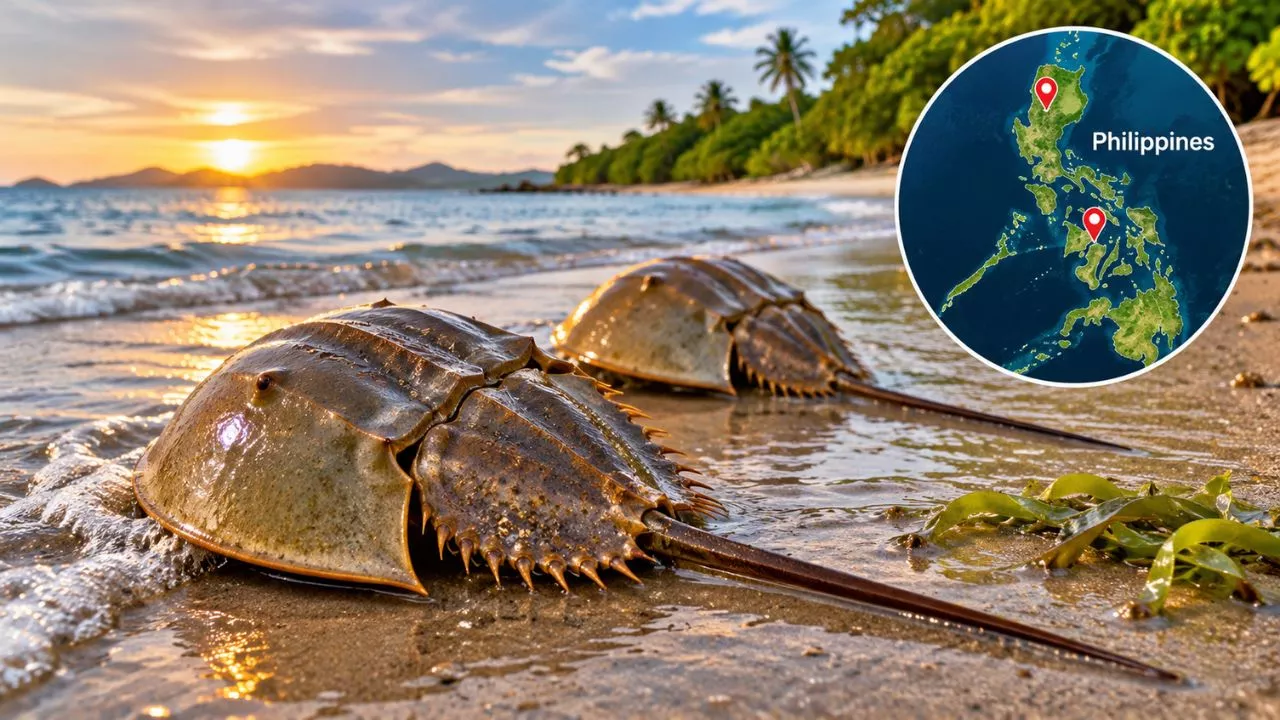
Horseshoe crabs in Tawi-Tawi have now been documented by Philippine scientists, adding a second province to the country’s map for these ancient marine animals. Until now, researchers had recorded them only in Palawan. The new finding comes from coastal communities who have long known these creatures by a local name. As a result, researchers are now calling for stronger conservation before populations shrink further.
How Scientists Found Horseshoe Crabs in Tawi-Tawi
The discovery began with a simple conversation. In December 2023, marine sciences professor Ivane Pedrosa-Gerasmio of Mindanao State University – Iligan Institute of Technology visited a market in Bongao, the provincial capital. There, locals mentioned seeing horseshoe crabs along their coasts.
She then shared the lead with her student, Quesie Tolero Omnos. Together, they designed a study to build baseline data for future research. Instead of starting with field surveys, the team turned to the people who know these waters best.
The researchers interviewed 142 residents across four municipalities. Specifically, they asked about:
- Where and how often people saw horseshoe crabs
- Whether numbers seemed to be rising or falling
- How the animals were collected and used
Interestingly, locals call the animals “bangkas” because their shell resembles the shape of a boat.
Two Species Likely Present in Tawi-Tawi
Fishers and coastal residents described two distinct types of horseshoe crab. Their descriptions closely matched the tri-spine horseshoe crab and the mangrove horseshoe crab. However, the identification is based on community accounts, so physical specimen surveys will help confirm it.
| Feature | Tri-spine Horseshoe Crab | Mangrove Horseshoe Crab |
|---|---|---|
| Scientific name | Tachypleus tridentatus | Carcinoscorpius rotundicauda |
| IUCN Red List status | Endangered | Data Deficient |
| Reported in Tawi-Tawi | Yes (based on resident descriptions) | Yes (based on resident descriptions) |
| Other Philippine record | Palawan | Palawan |
| Main concern | Declining Asian populations | Too little data to assess risk |
Where Residents Spot Horseshoe Crabs
The animals appear across a surprising range of coastal habitats. People reported seeing them on sandy beaches and in mangrove areas. Others found them among rocky coral and seagrass beds. Some fishers even encountered them in waters about 10 to 15 meters deep.
Sightings came from Bongao and several other coastal towns:
- Simunul
- Sitangkai
- Panglima Sugala
This wide spread suggests the species may use different habitats at various life stages. Still, more field research is needed to understand their full distribution.
Why Horseshoe Crab Numbers May Be Falling
More than half of the residents interviewed believed horseshoe crab numbers were dropping. They pointed to several possible causes. First, some locals collect the animals for traditional medicine, including remedies for asthma. Second, horseshoe crabs are used in rituals meant to help people believed to be troubled by bad spirits. In addition, residents linked the decline to climate change and industrial pollution.
These local concerns mirror a wider regional trend. Across Asia, horseshoe crab populations are falling. For example, Japan has lost key habitat, while Indonesia faces bycatch and beach litter. Meanwhile, China’s populations suffer from overharvesting, pollution and land reclamation along its coasts.
Why Protecting These “Living Fossils” Matters
Horseshoe crabs have survived for roughly 450 million years, which is far longer than the dinosaurs. Only four species exist today, and three of them live in Asia. Losing them would mean losing a lineage that has outlasted mass extinctions.
Beyond their age, these animals matter for several reasons:
- Ecological value: They form part of coastal food webs and habitats.
- Medical potential: Their blood has long been valued in pharmaceutical safety testing.
- Cultural importance: They hold traditional meaning for Tawi-Tawi communities.
According to Omnos, conservation should rest on solid evidence. In other words, scientists need data on where the crabs live, how many remain and what threatens them. That information could then help local governments create science-based management plans.
What Comes Next for Tawi-Tawi’s Horseshoe Crabs
This study marks an important first step rather than a final answer. Next, researchers will likely need field surveys and specimen collection to confirm both species. Population counts would also show how fast numbers are changing. Meanwhile, working with local communities could help balance traditional practices with long-term protection. Ultimately, the people who first reported the “bangkas” may become their most important guardians.
Frequently Asked Questions
Are there horseshoe crabs in the Philippines?
Yes. Horseshoe crabs have been recorded in Palawan, and a new study now documents them in Tawi-Tawi as well.
Which horseshoe crab species live in Tawi-Tawi?
Residents described two types resembling the tri-spine horseshoe crab and the mangrove horseshoe crab.
Why are horseshoe crabs called living fossils?
They have existed for about 450 million years, with a body form that has changed little over that time.
Are horseshoe crabs endangered?
The tri-spine horseshoe crab is listed as Endangered, while the mangrove horseshoe crab is Data Deficient due to limited information.