 NK Mehta
Every building, bridge and tunnel rests on something most people never see. For decades, many developers treated the ground as a fixed condition and kept early soil testing to a minimum. That approach is changing fast. Today, major construction projects are spending noticeably more on geotechnical investigations, and the reasons go far beyond simple caution.
Ask any experienced site engineer about their worst project, and the story often starts underground. A clay layer no one expected appears halfway down. Groundwater rises higher than the drawings assumed. Old fill material crumbles under load. Each surprise can trigger redesigns, idle crews and months of delay. As a result, owners and contractors now see thorough ground testing as one of the smartest investments they can make before construction begins.
What Geotechnical Investigations Actually Involve
A geotechnical investigation studies the soil, rock and groundwater beneath a proposed site. Engineers use the findings to design foundations, retaining walls, slopes and excavations that will stay safe for the life of the structure. In simple terms, it answers one key question: can this ground carry what we plan to build on it?
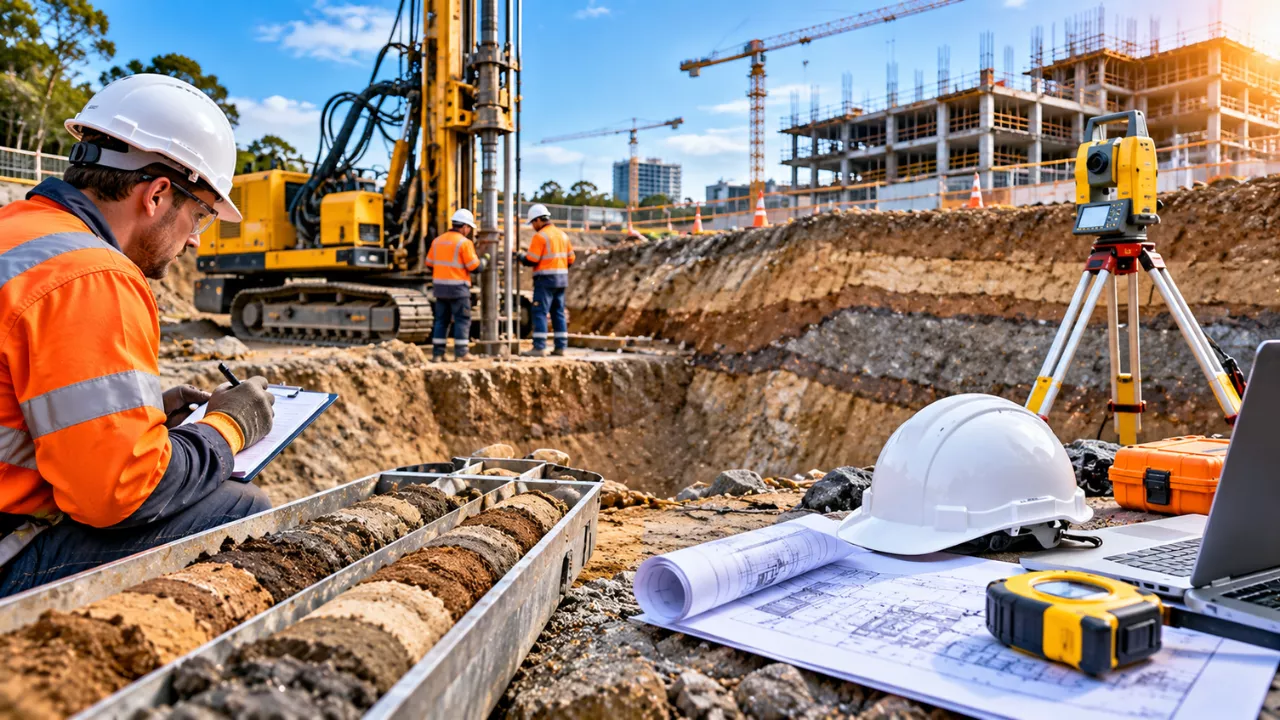
The work usually unfolds in stages. First, a desk study reviews geological maps, historic land use and records from nearby sites. Next, crews carry out field testing with drilling rigs and probes. Finally, laboratory tests measure strength, moisture, compressibility and chemistry. Together, these steps give designers a reliable picture instead of a guess.
Common Methods Used on Site
| Investigation Method | What It Reveals | Where It Is Most Useful |
|---|---|---|
| Boreholes with soil sampling | Soil layers, rock depth, physical samples for lab testing | High-rise buildings, bridges, deep foundations |
| Standard Penetration Test (SPT) | Soil density and resistance at different depths | Foundation design on mixed soils |
| Cone Penetration Test (CPT) | Continuous soil profile, strength and pore water pressure | Soft ground, infrastructure corridors |
| Trial pits | Shallow soil conditions, fill material, obstructions | Low-rise projects, early site checks |
| Geophysical surveys | Hidden voids, bedrock shape, buried structures over wide areas | Tunnels, rail lines, large land parcels |
| Groundwater monitoring wells | Water levels and seasonal changes | Basements, excavations, flood-prone sites |
| Laboratory testing | Shear strength, swelling potential, chemical contamination | Nearly all major projects |
Why Spending on Ground Investigation Is Rising
Several pressures are pushing budgets upward at the same time. None of them alone explains the shift. However, together they make deeper investigation hard to skip.
- Taller and deeper structures: Modern towers carry heavier loads, and many include multi-level basements. Consequently, foundations must reach further down, where conditions are harder to predict.
- Crowded urban sites: New projects often sit beside older buildings, metro lines and utility networks. Any ground movement can damage neighbouring property, so engineers need precise data.
- Brownfield redevelopment: Former factories, rail yards and landfills are being reused. These sites may hide contamination, buried foundations or loose fill.
- Climate pressures: Heavier rainfall, rising groundwater and longer droughts affect soil behaviour. Expansive clays, for example, swell when wet and shrink when dry.
- Stricter lenders and insurers: Financiers increasingly expect solid ground data before releasing funds or offering cover.
The Real Cost of Skipping Proper Soil Testing
Ground investigation typically accounts for a very small share of a project’s total budget. Yet unforeseen ground conditions remain one of the most frequent causes of claims, disputes and overruns across the construction industry. In other words, saving a little early can cost a great deal later.
Consider what happens when a piling crew hits unexpected boulders. Rigs stall, designs change, and specialist equipment must be brought in. Meanwhile, the rest of the programme waits. Moreover, contractors may file claims arguing that the ground differed from what the tender documents described. These disputes can drag on long after the building opens.
There is also a safety dimension. Excavation collapses, slope failures and uneven settlement can put workers and the public at risk. Because of this, many engineers now argue that thorough ground investigation is a safety measure first and a cost measure second.
How Better Ground Data Saves Money in the Long Run
Interestingly, more investigation does not always mean more expensive foundations. In many cases, it leads to leaner designs. When engineers lack data, they add generous safety margins to cover the unknowns. With better information, they can design with confidence and avoid over-building.
- Foundations can be sized more accurately, reducing concrete and steel use.
- Contractors can price work with fewer risk allowances, which often lowers tender prices.
- Schedules become more reliable because fewer surprises interrupt site work.
- Long-term maintenance drops, since settlement and cracking are less likely.
Additionally, accurate data supports sustainability goals. Using less concrete cuts the embodied carbon of a project. For developers chasing green building ratings, that benefit is becoming hard to ignore.
Technology Is Changing How Investigations Are Done
Ground investigation is no longer just about drilling holes and waiting weeks for lab results. Digital tools now help teams gather, share and understand data faster. For instance, 3D ground models let engineers see soil layers alongside the building design. Similarly, sensors placed in boreholes can stream groundwater and movement readings in real time.
Geophysical techniques have also improved. They allow teams to scan large areas quickly and then target boreholes where they matter most. As a result, clients often get better coverage without drilling everywhere. Although these tools add upfront cost, they tend to reduce uncertainty in a way traditional methods alone cannot.
What This Shift Means for Developers and Project Owners
The message for anyone planning a large project is clear. Ground investigation should start early, ideally during feasibility, not after the design is fixed. Early data shapes better decisions about building layout, basement depth and even whether a site is worth buying.
Owners should also treat the geotechnical report as a living document. Conditions found during construction should feed back into the model. Furthermore, sharing ground data openly with bidders helps reduce disputes, since everyone prices against the same information. Ultimately, the projects that invest wisely below ground are usually the ones that run smoothly above it.
Frequently Asked Questions
1. What is the main purpose of a geotechnical investigation?
It determines whether the soil, rock and groundwater at a site can safely support a planned structure. The results guide foundation design and excavation safety.
2. How much of a construction budget goes to ground investigation?
It is usually a small fraction of the total project cost. Even so, it has an outsized effect on avoiding delays, redesigns and claims.
3. When should soil testing be carried out?
Ideally during the feasibility or early design stage. Testing early allows the findings to shape the design rather than force costly changes later.
4. Can better soil data actually reduce foundation costs?
Yes. Reliable data lets engineers avoid excessive safety margins, which often results in smaller, more efficient foundations.