 NK Mehta
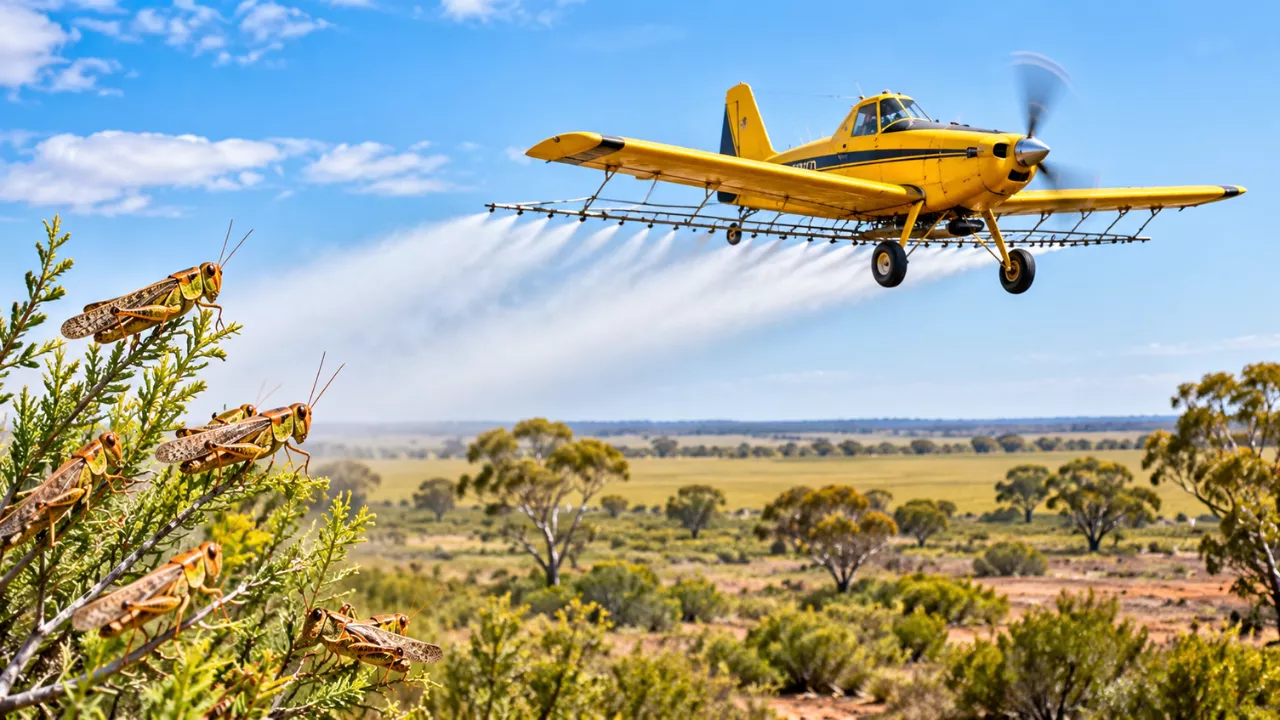
Aerial locust spraying in the Mallee is set to begin, marking a clear change in South Australia’s pest response. Only weeks ago, the state ruled out dropping chemicals from planes over the region. Now, however, seven Mallee sites east of Adelaide will be treated from next week. Many growers welcome the move. Still, plenty of them feel it has arrived far too late to save money or crops.
Why Aerial Locust Spraying in the Mallee Is Back on the Table
The Australian Plague Locust Commission (APLC) has been surveying the worst-hit areas on behalf of the state’s Department of Primary Industries and Regions (PIRSA). Recent surveys found locust targets that justified action. As a result, about 2,000 hectares between Pinnaroo and land south of the River Murray will be sprayed.
APLC director Bruce Hancocks described this round as the final chance to act. After this stage, he explained, the locusts will begin flying. That makes them much harder to control from the air. In addition, the commission says it will ask landholders for permission before spraying specific areas.
What Changed Since September
In September, PIRSA took a very different position. It planned to aerially spray up to 80,000 hectares in the state’s north, including the Flinders Ranges. At the same time, it ruled out the Riverland and Mallee.
The department’s reasons were specific. These regions carry more intensive farming, so chemical drift posed greater risks. Its main concerns included:
- Possible harm to livestock and food crops
- Contamination of waterways
- Exposure for nearby communities
- Poisoning of bees
PIRSA biosecurity executive director Nick Secomb says the plan has not truly changed. According to him, the fallback for these regions was always to rely on APLC surveillance. Until recently, he says, no targets were large enough to warrant spraying.
Key Facts at a Glance
| Detail | September Position | November Decision |
|---|---|---|
| Regions covered by aerial spraying | Northern SA, including Flinders Ranges | Seven Mallee sites east of Adelaide |
| Riverland and Mallee | Ruled out | Targeted sites approved |
| Area involved | Up to 80,000 ha in the north | Around 2,000 ha in the Mallee |
| Main reasoning | Chemical risks to crops, stock, water and bees | APLC surveys identified spray targets |
| Start date | Northern program already planned | From next week |
Farmers Say Help Comes Too Late
Growers have been asking for locust control since April. Meanwhile, the grain harvest has started across most of the state in recent weeks. The 2026–27 season is also tipped to deliver a record crop, so the stakes are high.
Loxton farmer Tom Fielke has already spent thousands of dollars on his own spraying. In his view, the aerial program is too little, too late. He notes that few hopper bands remain on roads or paddocks right now. Weeks earlier, by contrast, those bands were active on his property. He also says communication from the government has been poor throughout.
Opposition Questions the Delay
Shadow primary industries minister Nicola Centofanti backs the decision. Even so, she questions why it took so long. She points to 2010, when roughly 178,000 hectares were sprayed from the Loxton Control Centre. In her view, that operation showed aerial spraying in the region can be done safely and effectively.
Calls for a Review of the Locust Response
Grain Producers SA wants the whole program assessed once it ends. Chief executive Brad Perry says the review should examine aerial spraying in general. It should also test whether this season’s decisions were the right ones. Above all, he stresses that fast action matters when locusts threaten crops.
For Mallee growers, the lesson is practical. Timing is everything in locust control. Hoppers on the ground are far easier to target than adults in flight. Therefore, any future plan will likely face pressure to act earlier in the season.
FAQs
Where will aerial locust spraying happen in the Mallee?
Seven sites east of Adelaide will be sprayed, covering about 2,000 hectares between Pinnaroo and areas south of the River Murray.
Why did South Australia first refuse to spray the Mallee?
PIRSA said intensive farming there raised risks to crops, livestock, waterways, communities and bees.
Why do farmers say the spraying is too late?
Harvest has already started, and most locusts are close to flying. Many farmers had also paid for their own spraying weeks earlier.
Will there be a review of the locust program?
Grain Producers SA has called for one once the program finishes, including a look at aerial spraying decisions.