 NK Mehta
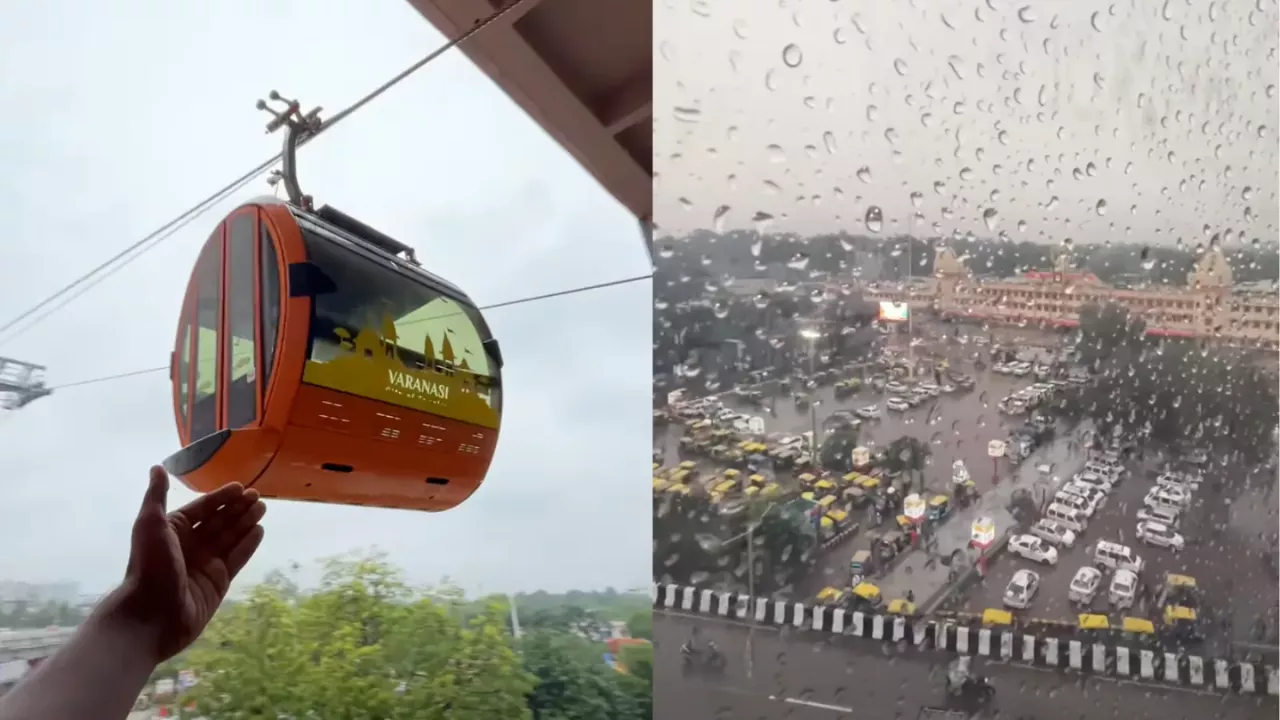
Anyone who has travelled from Varanasi Cantt station to Godowlia knows the drill. Autos inch forward, e-rickshaws squeeze through gaps, and a short ride can stretch close to an hour. The Varanasi ropeway aims to change that. India’s first public transport ropeway is set to carry passengers above the city’s narrow, packed streets. As a result, one of Kashi’s busiest corridors could soon become a quick 16-minute aerial ride.
Why the Varanasi Ropeway Matters for Kashi
Varanasi is not built for heavy traffic. Its old lanes are narrow, and much of the city sits on a dense historic core. Widening roads here is difficult, and a full metro line would be costly and disruptive. Therefore, planners chose a cable car system that needs only stations and towers on the ground.
The route also serves a huge daily crowd. Pilgrims head to Kashi Vishwanath Dham and Dashashwamedh Ghat, while locals travel for work, school and shopping. Moreover, the number of visitors has grown sharply since the Kashi Vishwanath corridor opened. In short, the ropeway targets the exact stretch where road congestion hurts the most.
Varanasi Ropeway Route and Stations
The line runs for about 3.75 km between Varanasi Cantonment railway station and Godowlia Chowk. Along the way, it stops at five stations:
- Varanasi Cantt – the main starting point, close to the railway station
- Kashi Vidyapith (Bharat Mata Mandir) – serving the university and nearby areas
- Rath Yatra – a key commercial crossing in the city
- Girja Ghar – planned mainly as a technical station
- Godowlia Chowk – the gateway to the temple and ghat area
Interestingly, the station designs draw on Kashi’s spiritual identity. The Cantt station features motifs such as the damru, trident, conch and the crescent moon, all linked to Lord Shiva.
Key Facts About the Kashi Ropeway Project
| Feature | Details |
|---|---|
| Route | Varanasi Cantt to Godowlia Chowk |
| Total length | About 3.75 km |
| Number of stations | 5 |
| Gondolas | Around 153 cabins |
| Seats per gondola | 10 passengers |
| Peak capacity | About 3,000 passengers per hour per direction |
| Expected daily ridership | Nearly 96,000 passengers |
| End-to-end travel time | Around 16 minutes |
| Support towers | About 30 |
| Daily operating hours | Around 16 hours |
| Project cost | Roughly ₹807 crore |
| Technology partner | Bartholet Maschinenbau AG (Switzerland) |
| Expected opening | 24 November 2026 |
How the Aerial Commute Will Work
The system uses gondolas that hang from steel cables and move continuously between stations. Because cabins arrive every few minutes, passengers will not need to wait long for a ride. In addition, each gondola carries up to 10 people, which keeps boarding quick even during busy hours.
The project is being developed by National Highways Logistics Management Limited (NHLML) under a hybrid annuity model. Meanwhile, the Swiss firm Bartholet supplied the ropeway technology. Trial runs began in September 2026, and by the end of that month, work had crossed roughly 94 per cent completion. Officials have now set 24 November 2026 as the target date for passenger services, subject to final readiness.
As for fares, early reports have pointed to a ticket of around ₹50 for a ride towards the temple area. However, final pricing will be confirmed by the operating agency at launch.
What Commuters and Pilgrims Can Expect
For daily commuters, the biggest gain is time. A trip that often takes 40 minutes or more by road could drop to about a quarter of an hour. Similarly, pilgrims arriving by train will be able to reach Godowlia without battling traffic or bargaining with drivers.
There are other benefits too:
- Less road congestion as some traffic shifts overhead
- Lower emissions, since the ropeway runs on electricity
- Easier travel for elderly visitors heading towards the ghats
- Scenic views of temples, rooftops and markets from above
Of course, the ropeway will not solve every traffic problem in Varanasi. Still, it adds a reliable, weather-friendly option on a corridor that badly needs one. If it performs well, other crowded Indian cities may follow the same path.
Frequently Asked Questions
1. When will the Varanasi ropeway open to the public?
Passenger services are expected to begin on 24 November 2026, subject to final safety and operational checks.
2. How long does the Varanasi ropeway ride take?
The full journey from Varanasi Cantt to Godowlia Chowk takes about 16 minutes.
3. How many stations does the Kashi ropeway have?
It has five stations: Varanasi Cantt, Kashi Vidyapith, Rath Yatra, Girja Ghar and Godowlia Chowk.
4. How many people can the Varanasi ropeway carry?
It can move about 3,000 passengers per hour in each direction, with nearly 96,000 riders expected daily.