 NK Mehta
The bogong moth migration has returned to Victoria’s High Country in numbers few people expected to see again. This spring, citizen scientists have logged a remarkable jump in sightings. As a result, researchers now feel cautiously hopeful about the moth and about one of Australia’s most threatened mammals, the mountain pygmy possum.
For years, the story of the bogong moth was one of decline. Now, however, a swirling “maelstrom” of moths on a Victorian summit has become a symbol of what a good season can bring.
A Night Surrounded by Thousands of Bogong Moths
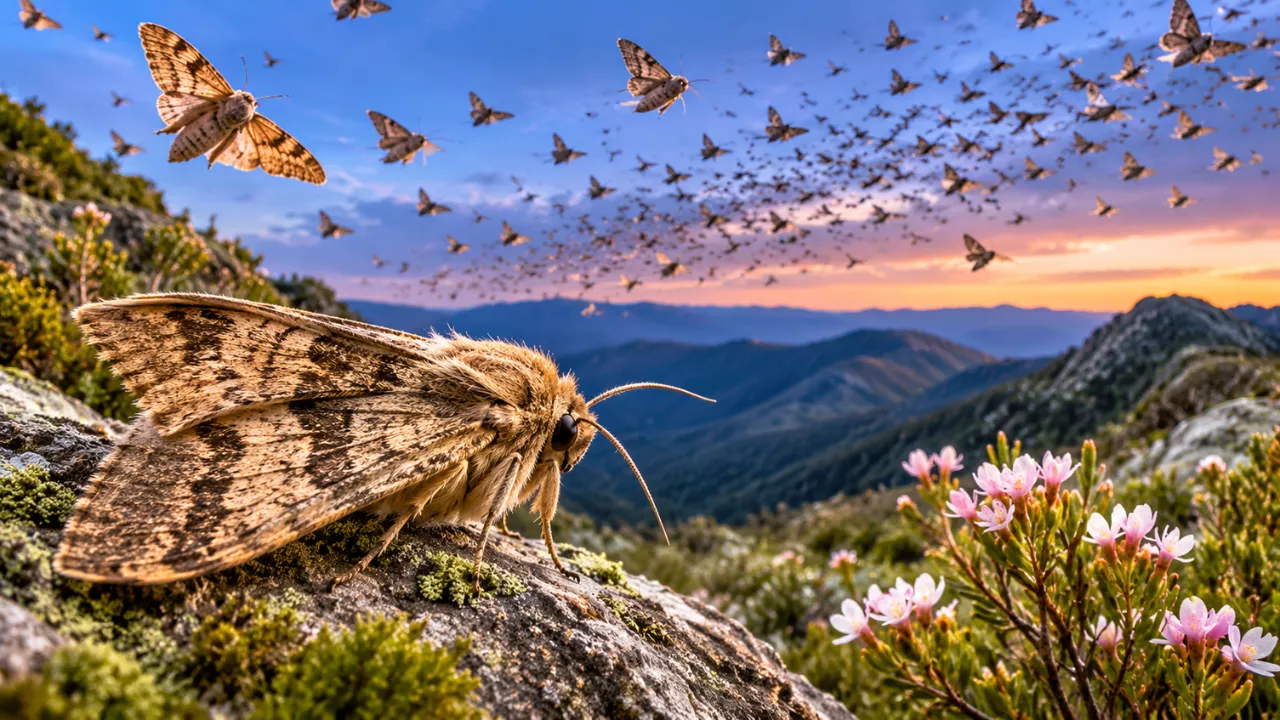
Kale Munro, a citizen scientist who has followed bogong moths for years, was on the 1,750-metre summit of Mount Wills near Omeo when the moths started to arrive. At first, only about ten moths appeared around dusk. Then, as the light faded on that cool evening, the handful grew into hundreds.
By the time the sun had fully set, Munro stood in the middle of thousands of moths. He later described the scene as something special to witness. The following morning offered another surprise, because granite crevices at the summit were densely packed with resting moths, layered across the rock like tiles.
Understanding the Bogong Moth Migration
Every spring, bogong moths emerge from the soil in their breeding grounds across Queensland, New South Wales and western Victoria. After that, they travel more than 1,000 kilometres to Australia’s alpine zone. There, the moths shelter in cool mountain caves through summer, a dormant phase known as aestivation.
Once summer ends, the moths head back to the lowlands to breed over winter. Their larvae then feed underground on plant roots. Consequently, the health of lowland plants plays a direct role in how many moths make the next journey.
Key features of the migration include:
- Distance: More than 1,000 km each spring
- Destination: Alpine caves and rock crevices
- Summer behaviour: Dormancy (aestivation) in cool shelters
- Winter behaviour: Return flight to lowland breeding grounds
- Larval food: Plant roots below ground
Why Do Bogong Moths Swarm?
Scientists still do not fully understand why bogong moths choose certain caves or why they gather in swirling groups. According to Zoos Victoria’s Dr Marissa Parrott, light, heat or a need for water could all play a part. In fact, moths have been seen drinking during these swarming events, which offers one possible clue.
Record Sightings Through the Moth Tracker Project
Zoos Victoria launched its citizen science project, Moth Tracker, in 2019. This year, the program has recorded more than 14,000 sightings. By comparison, its previous best year brought in roughly 2,000.
| Detail | Information |
|---|---|
| Conservation status of bogong moth | Endangered |
| Conservation status of mountain pygmy possum | Critically endangered |
| Migration distance | More than 1,000 km |
| Moth Tracker launch year | 2019 |
| Sightings in 2026 | More than 14,000 |
| Previous best year | Around 2,000 sightings |
| Major population crashes | 2017 and 2019 |
| Long-term decline began | 1980s |
| Mount Wills summit height | 1,750 metres |
Dr Parrott believes recent wet seasons may have helped moth numbers reach a critical mass. Even so, she stresses that the species remains endangered. A warming alpine habitat and drought continue to threaten its long-term future.
Why the Mountain Pygmy Possum Depends on Bogong Moths
The timing of the moth migration matters greatly for the mountain pygmy possum. Just as the moths arrive, these tiny possums wake from winter hibernation and go looking for food. Bogong moths are their preferred meal, so a poor moth season leaves them short of energy.
The 2017 and 2019 crashes were linked to severe drought in lowland breeding and feeding areas. Without enough plant nutrition, moth larvae starved, and fewer adults made the trip. In turn, the possums suffered badly. Across Victoria’s monitored populations, more than half of female possums lost their entire litters. In the hardest-hit population, the figure reached about 95 per cent.
For that reason, this year’s surge in moths gives researchers real hope. A strong food supply could help more female possums raise their young successfully.
How Citizen Science Is Shaping Moth Research
Munro’s footage soon caught the attention of Connor Marsland, a Western Sydney University PhD student who has studied bogong moth migration since 2024. Marsland draws on public submissions from platforms such as iNaturalist and Moth Tracker. He described the Mount Wills swarm as a striking example of the moths in full flight.
Researchers can only visit a limited number of sites each season. Therefore, reports from hikers and locals help them find moth caves they might otherwise miss. These records also guide decisions about which locations to monitor in future years.
Western Sydney University entomologist Dr Eleanor Drinkwater has also praised the public’s contribution. By her calculation, volunteers have gathered the equivalent of about 12 years of night-time observations in less than one year. Ultimately, this level of community effort is giving scientists a far clearer picture of a migration that still holds many mysteries.