 NK Mehta
Galápagos iguana trafficking has become one of the most urgent wildlife crime problems in South America. In August 2026, Ecuadorian officials stopped a Russian traveller at Quito’s airport with 32 live marine iguanas packed into eight plastic boxes. The animals were tied up, badly dehydrated, and bound for Iceland. As a result, they were rushed to a conservation centre in Pichincha for specialist care. Roughly a month later, 24 survivors were returned to the islands they were most likely taken from.
That case was not isolated. Now a group of scientists is asking Ecuador to treat the problem as organised crime rather than as a string of unlucky arrests.
Why Galápagos Marine Iguanas Are So Valuable to Smugglers
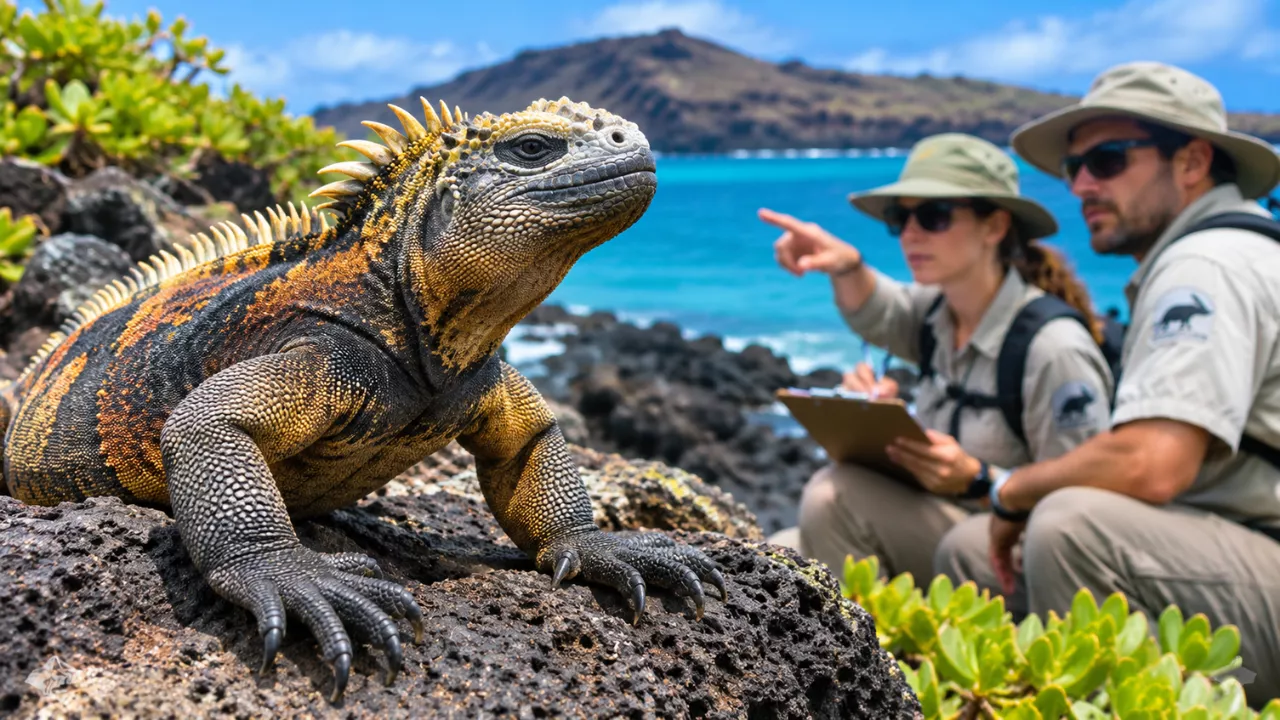
The marine iguana (Amblyrhynchus cristatus) is a threatened species found nowhere else on Earth. It is also the only lizard in the world that swims in the sea and feeds on algae. Scientists recognise around 11 subspecies, each tied to particular islands. For example, one subspecies lives only on Wolf Island.
The archipelago is home to four endemic iguana species in total. All of them are wanted by exotic pet collectors, mainly in Europe and Asia. Consequently, the rarer and stranger an animal looks, the higher its price on the black market. Social media listings have also made these reptiles easier to advertise and sell.
However, the law is clear. Removing any wildlife from the Galápagos is illegal under Ecuadorian law. In addition, marine iguanas were moved to CITES Appendix I in 2025, which bans their commercial international trade entirely.
Recent Galápagos Iguana Trafficking Seizures in 2026
So far this year, authorities have confiscated close to 50 marine iguanas. Experts note that seizures usually capture only a small slice of the real trade. Therefore, a rise in arrests could reflect better enforcement, a jump in smuggling, or both.
| Month (2026) | Location | What Happened | Iguanas Involved | Intended Destination |
|---|---|---|---|---|
| May | Guayaquil, mainland Ecuador | Four separate cases of iguanas found on city sidewalks | 4 | Unknown |
| May | Ecuador | Three Thai nationals arrested | 12 young marine iguanas | Asian markets |
| August | Quito airport | Russian woman caught with iguanas in eight plastic boxes | 32 (24 later released) | Iceland |
What Scientists Are Asking Ecuador to Do
In a letter published in the journal Science, marine conservationist Juan José Alava of Simon Fraser University and his co-authors set out a clear plan. First, they want Ecuador to audit how its airports detect smuggled wildlife. Second, they call for checks on the people who oversee airports and on staff working for the Galápagos National Park. Finally, they want trafficking networks broken up rather than just individual couriers arrested.
This matters because the Galápagos already has some of the world’s strictest visitor rules. For instance:
- The Galápagos Biosecurity and Quarantine Agency inspects bags on arrival and departure.
- Visitors must be accompanied by park-certified naturalist guides.
- Tourists must keep at least two metres (6.6 feet) away from wildlife.
Even so, animals keep leaving the islands. Alava has said he was shocked that some caught tourists claimed buying iguanas in a market had been easy. In his view, corruption, particularly at airports, may be helping smugglers slip through. He describes the trade as essentially organised crime, layered on top of climate change, habitat loss, plastic litter and chemical pollution.
The Role of Struggling Fishing Communities
The authors also point to a human side of the problem. Traffickers may recruit artisanal fishers in the Galápagos and on Ecuador’s coast. Many of these fishers have lost income while caught between drug cartels and recent US strikes on boats.
Sandra Altherr, co-founder of the German NGO Pro Wildlife, has studied this trade closely. She was not part of the letter. According to her, smugglers rarely collect the animals themselves. Instead, they rely on local people to find them, a pattern seen wherever poverty pushes people toward extra cash.
For this reason, Alava argues that the government must offer these communities other ways to earn a living. Wildlife trafficking often pays better than fishing. Moreover, a Super El Niño predicted for 2027 could cut catches even further, adding more pressure.
How CITES Loopholes Keep the Legal Trade Alive
Here is where the story gets more complicated. Ecuador has never declared a single live export of its endemic iguanas. Yet Switzerland, Uganda, Mali and Japan have issued CITES export permits for several individuals labelled “captive-bred,” without confirming where they came from. Those animals then reach buyers in Asia and Europe.
Trade data reviewed by journalists also show that four marine iguanas were shipped from Uganda to Vantara, the large private zoo in India, in December 2025. Notably, that happened just days after the species gained Appendix I protection.
Alava says no authorised captive breeding facilities exist for these animals. In fact, breeding them is extremely hard. They need the specific sand of the Galápagos and the macroalgae they eat, conditions that are nearly impossible to copy in captivity. Nevertheless, once a permit exists, the animals can be traded legally, whatever their true origin.
What the Upcoming CITES Meeting Could Change
At a CITES meeting this November, member countries will discuss new guidance on whether offspring of illegally taken parents, or of illegal founder stock, can still be traded legally. Conservationists hope the rules will reach all the way back to the founder animals.
If that happens, Altherr says, countries would be required to act against illegally sourced founder stock and all of its offspring. In practice, that could mean Galápagos iguanas kept in terrariums worldwide being seized and sent back to Ecuador.
Why Stopping Galápagos Iguana Trafficking Matters for Everyone
The Galápagos shaped our understanding of evolution, and its wildlife continues to teach scientists today. Losing marine iguanas to the pet trade would damage that living laboratory for good. Closing these gaps, Alava argues, is about giving future generations the same chance to see these remarkable animals in the wild.
Ultimately, tougher airport checks, honest oversight, real income options for fishers and tighter CITES rules all need to work together. Without that combined effort, the smuggling routes will simply adapt.
Frequently Asked Questions
Is it legal to buy a Galápagos marine iguana as a pet?
No. Taking any wildlife from the Galápagos is illegal under Ecuadorian law, and marine iguanas are listed on CITES Appendix I, which bans their commercial international trade.
How many marine iguanas have been seized in 2026?
Authorities have confiscated nearly 50 marine iguanas so far this year, including 32 found at Quito’s airport in August.
Why are captive-bred Galápagos iguanas a concern?
Several countries have issued export permits for “captive-bred” iguanas without verifying their origin. Experts say no authorised breeding facilities exist, so many of these animals may come from smuggled stock.
What can CITES do to stop the trade?
CITES members are discussing rules on whether offspring of illegally taken animals can be traded. Extending those rules to founder stock could lead to iguanas held abroad being confiscated and returned to Ecuador.