 NK Mehta
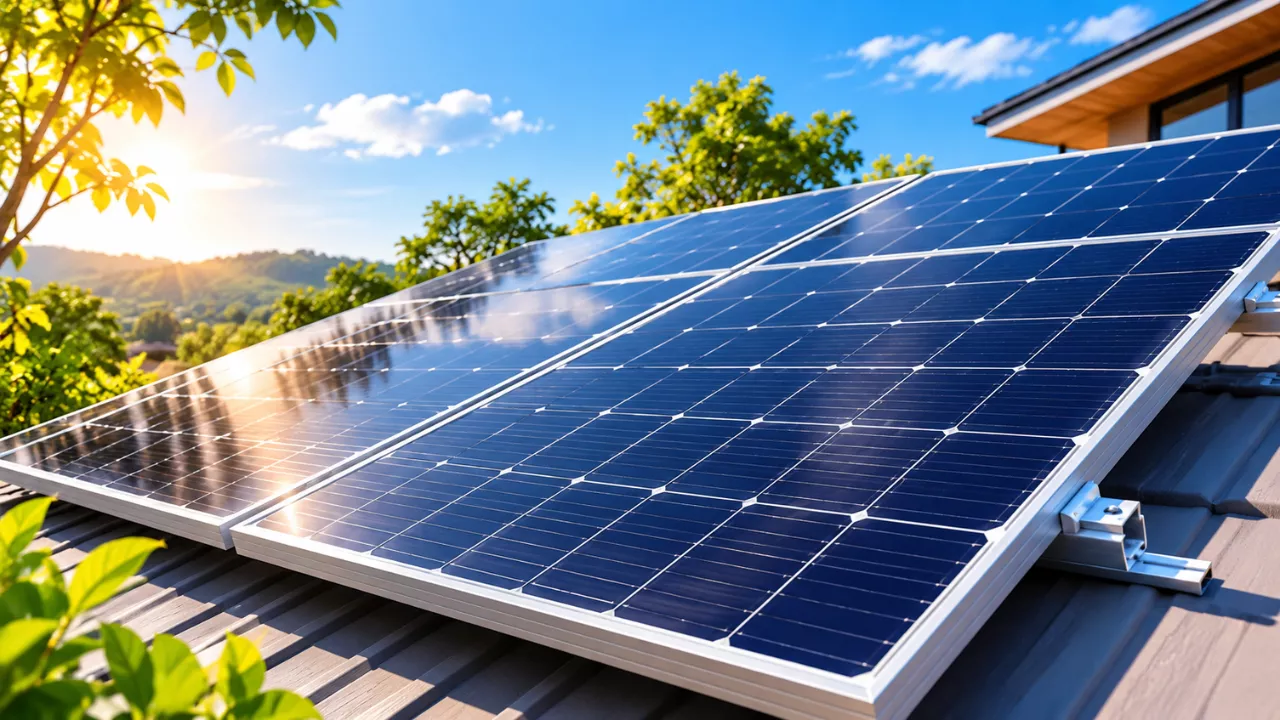
Rooftop solar keeps getting more powerful, and the latest step comes from Longi. The Chinese manufacturer has launched its Longi Hi-MO X12 solar modules, rated at up to 690 W. Instead of chasing gains through bigger panels alone, Longi changed how the cells connect inside the module. As a result, the company says each panel produces more power and carries far fewer weak points that can fail over time.
The series made its debut at All Energy Australia 2026 in Melbourne, held on October 28 and 29. It targets homes as well as commercial and industrial rooftops. However, Longi has not yet shared Australian pricing, shipment volumes, or a delivery timeline.
What Makes the Longi Hi-MO X12 Solar Modules Different?
Most solar panels link their cells with thin soldered metal ribbons. These joints work well, but each one is a small spot where heat, stress, or moisture can cause trouble later. Longi’s new design removes those ribbons entirely.
Instead, the cells sit directly on a conductive backsheet. This layer has metal foil circuits built into the rear of the module. According to Longi, this approach eliminates more than 15,000 potential solder-joint failure points in every panel. For installers and owners, that means fewer chances for hidden faults years after installation.
The modules also use Longi’s HPBC 2.0 cells, short for hybrid passivated back contact. Because back-contact cells place their electrical contacts on the rear, the front surface stays cleaner and catches more sunlight.
How the New Design Adds Extra Power
The power boost comes from two separate changes working together:
- Conductive backsheet: The metal foil raises the current-carrying area by about 85%. Consequently, Longi says it adds 6 W to 8 W per module.
- Full-Screen Technology: This combines shingled cell layouts with hidden busbars. In turn, it cuts shading and dead space on the front, adding another 8 W to 12 W.
- Combined gain: Together, the two features deliver roughly 14 W to 20 W more than conventional designs.
Durability also gets attention. Longi claims its thin stacking process lowers internal stress by 60%. In addition, a built-in metal foil barrier reportedly blocks 90% more water vapor, which matters in humid or coastal climates.
Longi Hi-MO X12 Specifications at a Glance
The series comes in two sizes. The larger panel suits commercial rooftops, while the smaller one fits homes and tighter roof spaces.
| Specification | LR7-72WVD (Large) | LR7-54WVD (Compact) |
|---|---|---|
| Target use | Commercial and industrial roofs | Residential and smaller roofs |
| Power range | 660 W – 690 W | 495 W – 510 W (four classes) |
| Module efficiency | Up to 25.54%+ | 24.25% – 24.99% |
| Cell count | — | 108 cells, dual-glass |
| Dimensions | — | 1,800 × 1,134 × 30 mm |
| Weight | — | 23.5 kg (51.8 lb) |
| Glass (front / rear) | — | 2.0 mm / 1.6 mm |
| Temperature coefficient | — | -0.26% per °C |
| Operating range | — | -40°C to 85°C |
| Max system voltage | — | 1,500 V |
Detailed datasheet figures have so far been published for the compact LR7-54WVD model only.
Warranty and Long-Term Performance
For most buyers, a panel’s lifespan matters as much as its peak rating. The compact LR7-54WVD carries a 25-year product warranty and a 30-year performance warranty.
Longi guarantees no more than 1% power loss in the first year. After that, degradation is capped at 0.35% per year. In practical terms, the panel should still deliver about 88.9% of its original output after three decades.
The module is also built to handle tough weather:
- Static load ratings of 5,400 Pa on the front and 2,400 Pa on the rear
- Resistance to 25 mm hailstones striking at 23 m/s
- Certification under IEC 61215 and IEC 61730, with marks from TÜV Rheinland and TÜV SÜD
A low temperature coefficient of -0.26% per °C also helps. Simply put, the panel loses less power on hot days than many older designs. That is useful in sunny regions such as Australia, India, and the Middle East.
What This Launch Means for Rooftop Solar Buyers
Rooftop space is limited, so every extra watt per panel counts. Higher output per module means a homeowner can reach the same system size with fewer panels. Similarly, businesses can squeeze more generation from a fixed roof area.
The solder-free approach may prove even more important over time. Many panel failures trace back to cracked joints or moisture getting inside. By removing thousands of solder points and adding a stronger vapor barrier, Longi is addressing reliability, not just headline wattage.
That said, buyers should wait for real-world pricing and independent field data before deciding. Longi also showcased other products in Melbourne, including the Hi-MO 9 Prime utility-scale module, LongiBank 3.0 and OneMatrix storage systems, and its Longi Block modular PV system.
Frequently Asked Questions
What is the maximum power of the Longi Hi-MO X12 solar modules?
The larger LR7-72WVD version reaches up to 690 W. The compact LR7-54WVD version ranges from 495 W to 510 W.
How efficient are the Longi Hi-MO X12 panels?
The larger model exceeds 25.54% efficiency. Meanwhile, the compact model ranges from 24.25% to 24.99% under standard test conditions.
What is a conductive backsheet in a solar panel?
It is a rear layer with built-in metal foil circuits. The cells connect directly to it, replacing traditional soldered ribbons and reducing possible failure points.
What warranty comes with the Longi Hi-MO X12?
The compact model offers a 25-year product warranty and a 30-year performance warranty, retaining about 88.9% of its original output after 30 years.