 NK Mehta
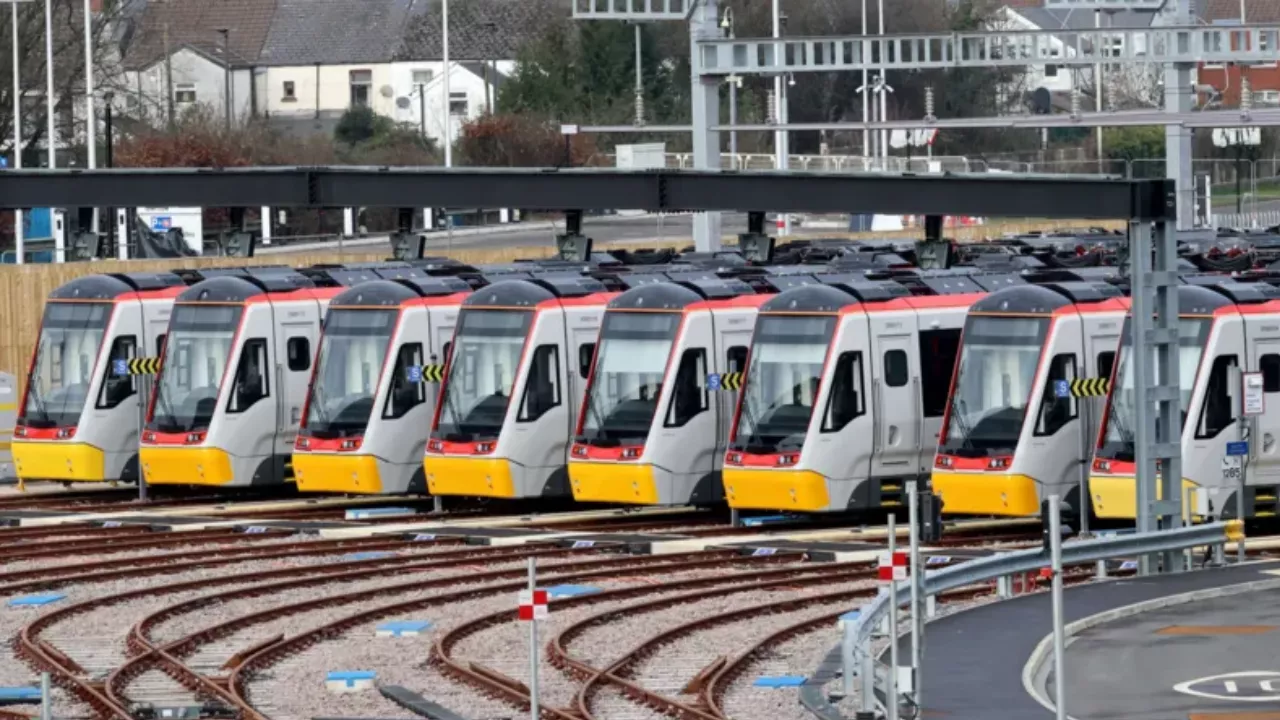
A fleet of £200m taxpayer-funded trains has spent more than three years mostly parked in a depot near Cardiff. The first of these tram-trains reached Wales in March 2023. Yet only a handful carry passengers today.
The vehicles are meant to be the final piece of the £2bn South Wales Metro. This is Wales’ biggest infrastructure project since devolution in 1999. However, full service was first promised for 2022. Now, Transport for Wales (TfW) says it may not happen until the end of 2027.
What Are the £200m Taxpayer-Funded Trains?
The fleet is officially called the Class 398 Citylink. TfW ordered the 36 units from Swiss manufacturer Stadler in 2018. Each three-carriage vehicle costs around £8m. In addition, each one can run on both city streets and railway lines.
The tram-trains also use on-board batteries. As a result, they can cross sections of track without overhead wires. TfW says this approach saved about £400m and several years of work. Only around two-thirds of the network has traditional overhead lines.
| Key Detail | Information |
|---|---|
| Train type | Class 398 Citylink tram-train |
| Manufacturer | Stadler (Switzerland) |
| Year ordered | 2018 |
| Fleet size | 36 units |
| Approximate cost per unit | £8m |
| First delivery | March 2023 |
| Units that have passed testing | 16 |
| Units in passenger testing | 6 |
| Original full-service target | 2022 |
| Current full-service target | End of 2027 |
| Network length | 105 miles (170km) |
Why Have the Tram-Trains Barely Been Used?
Testing is the biggest hold-up. Every unit must pass strict checks before the rail regulator allows it on the UK network. So far, only 16 of the 36 have cleared that process. Meanwhile, the other 20 are still waiting.
Furthermore, these checks can take anywhere from six weeks to two years per vehicle. Software has also caused trouble. Because the whole fleet runs on one large software system, a single fault can affect several trains. Consequently, the six units in passenger use have been pulled from service at times.
Other factors have added to the delay:
- Late electrification: Overhead line work was only finished in March 2026.
- Covid disruption: The pandemic slowed construction across the network.
- Supply chain problems: The war in Ukraine affected materials and parts.
- Crew training: Several hundred staff still need training on the new fleet.
- Signalling work: Upgrades are still needed at Cardiff Queen Street station.
What Transport for Wales Says About the Delay
TfW chief executive James Price has admitted the delay is frustrating. Even so, he says it was not unexpected. In his view, trains are not mass-produced, so problems often appear only once they enter service.
Price also insists the trains themselves are sound. Instead, he blames the software. He argues that once automation works fully, future fixes can be sent through software updates. That, he says, would be cheaper and faster than hardware changes.
Notably, TfW chose not to launch the fleet with a big public event. The operator feared the trains might need to be withdrawn early. Therefore, it opted for gradual customer testing instead. Price has also met Stadler’s chief executive in Germany to push for a faster rollout.
Criticism From Experts and Politicians
Not everyone accepts TfW’s explanation. Rail engineer and broadcaster Gareth Dennis believes the tram-trains may simply be too complex. They combine tram and train functions, battery power and partial electrification. According to Dennis, this mix is rare for good reason.
Opposition politicians have also raised concerns. Reform’s transport spokesperson Jason O’Connell said taxpayers deserve a clear explanation for the spiralling delays. Similarly, others have questioned why so many trains sit idle in TfW’s £100m depot at Taff’s Well.
Still, the Welsh government has defended the project. It says TfW has already improved services across the valleys. It also expects the full rollout to finish by the end of 2027.
When Will Passengers See the Full Service?
For now, commuters are not without modern trains. Since 2024, TfW has used newer Class 756 units on the valley lines. These replaced older trains, including the much-criticised Pacers.
Once the tram-trains enter full service, the Class 756 fleet will move to the Bridgend–Rhymney line. After that, services between Cardiff and Aberdare, Merthyr Tydfil and Treherbert should double. Passengers would get four trains an hour instead of two.
TfW also claims journeys from the top of the valleys to Cardiff could drop to around 50 minutes. In short, the promised “turn-up-and-go” service is still coming. It is just arriving five years later than planned.