 NK Mehta
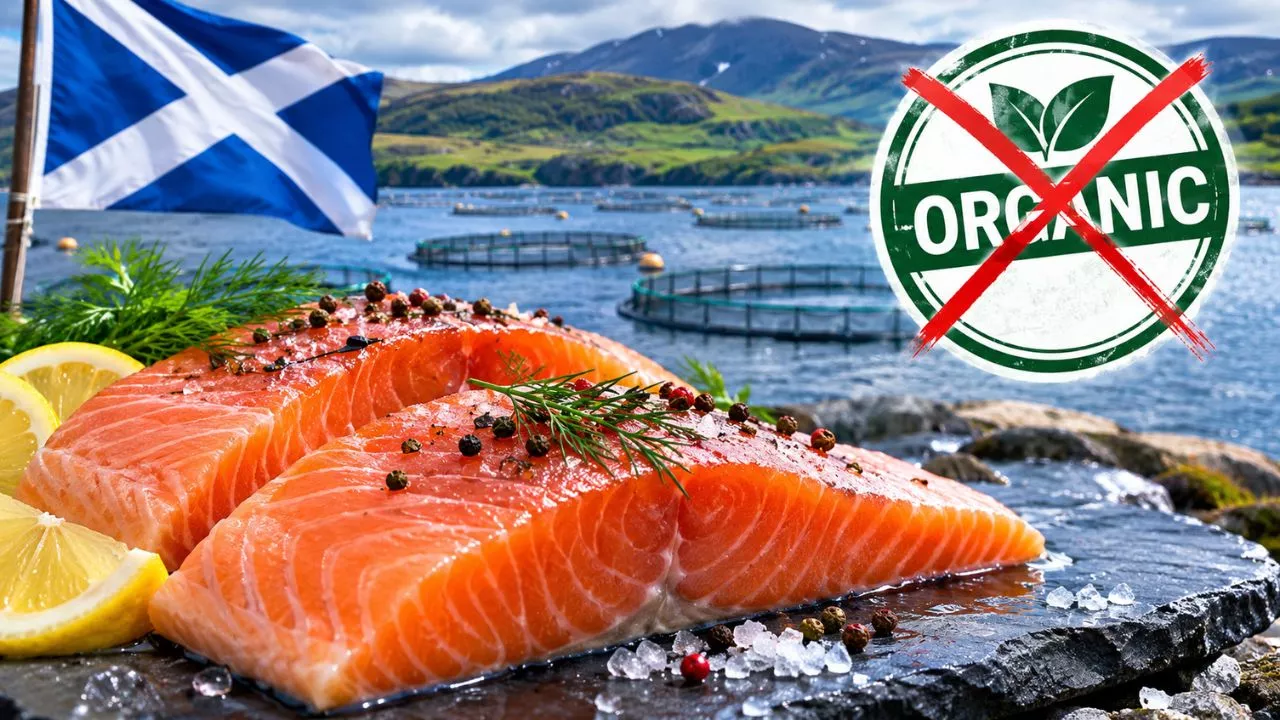
Scottish farmed salmon has long been sold as a premium, responsible choice. Now, however, that image has taken a serious knock. The Soil Association, the UK’s best-known organic certifier, has announced it will stop setting standards for organic salmon. As a result, farms in Scotland will gradually lose the organic logo on their packs.
The charity reached this decision after a two-year review of its role in the sector. It concluded that its standards had pushed the wider industry forward. Even so, it found too little evidence that fish welfare and environmental outcomes were good enough. Equally important, it doubted things could improve quickly enough.
Why the Soil Association Walked Away From Organic Salmon
For more than 20 years, the Soil Association hoped salmon farming could follow organic principles at sea. Its vision was a richer, more natural environment where salmon could live well with little harm to other species. In practice, though, its chief executive Helen Browning admitted that progress had been negligible.
Organic rules did deliver some benefits. For example, they required lower stocking densities and banned the most damaging chemical treatments. Nevertheless, the charity said outcomes still fell short of its high bar. It also flagged new threats, such as jellyfish blooms linked to warming seas. In its view, solving these problems needs a wider research effort that a charity cannot lead.
The decision followed sustained pressure from campaigners, including the Green Britain Foundation and broadcaster Chris Packham. The Soil Association will now agree a timeline with the industry for removing its logo. Further updates are expected over the coming months.
The Welfare Problems Facing Scottish Farmed Salmon
To understand the decision, it helps to look at what happens inside open-net pens. Salmon are kept in cages in sea lochs and coastal waters. Because water flows freely through the nets, parasites and disease can move easily between farmed and wild fish.
Several issues come up repeatedly in inspections and campaign reports:
- Sea lice: Parasites that feed on salmon skin and mucus, causing wounds and stress.
- Gill disease: Conditions such as amoebic gill disease damage breathing and raise death rates.
- Treatment injuries: Lice are often removed with warm-water baths or high-pressure washers, which can hurt or kill fish.
- Warmer seas: Plankton and jellyfish blooms are becoming a growing cause of losses.
In addition, undercover footage filmed in March 2026 at a farm in Fiunary showed salmon with blindness, open wounds and heavy lice burdens. That site had also recorded high lice counts during the sensitive spring period.
How Sea Lice Spread Beyond the Farm
Sea lice are not only a problem for caged fish. When lice build up on a farm, their larvae drift into surrounding waters. Consequently, wild juvenile salmon and sea trout swimming out to sea can become infected. The Scottish Government’s own Wild Salmon Strategy accepts that farms can substantially raise lice levels in coastal habitats.
For this reason, the industry’s Code of Good Practice sets a stricter limit between 1 February and 30 June. During that window, farms should keep average adult female lice below 0.5 per fish.
Key Figures Behind the Debate
The table below summarises the main data points that have shaped the welfare argument.
| Issue | What the Data Shows |
|---|---|
| Unexpected salmon deaths | Over 35 million recorded across a three-year period, according to Animal Equality UK |
| Cleaner fish deaths | At least 7 million of around 22 million lumpfish and wrasse died between 2020 and 2024 |
| Sensitive lice period | 1 February to 30 June each year |
| Lice limit in that period | Below 0.5 adult female lice per fish on average |
| Main causes of death | Gill disease, plankton and jellyfish blooms, warmer seas and lice treatments |
| Organic certification | Soil Association withdrawing; logo removal timeline still to be agreed |
The Hidden Cost: Cleaner Fish
Many farms use lumpfish and wrasse to eat lice off salmon. At first glance, this sounds like a natural, chemical-free fix. However, these cleaner fish suffer high death rates of their own. Moreover, they are largely missing from official mortality figures, so the true toll is easy to overlook.
The Scottish Government says it is drawing up welfare guidance that will cover cleaner fish. Meanwhile, Salmon Scotland, which represents producers, insists its members follow some of the world’s highest health and welfare standards for all fish in their care.
What This Means for Shoppers
If you buy organic Scottish salmon, you will not see the change overnight. Instead, the logo will be phased out once a timeline is agreed. Until then, it is worth reading labels more closely and asking retailers how their salmon is raised.
Here are a few practical steps:
- Check certification: Look for any remaining welfare scheme and find out what it actually requires.
- Ask your fishmonger: Good suppliers can tell you the farm, region and rearing method.
- Vary your choices: Try other sustainably sourced fish to reduce pressure on a single sector.
- Follow updates: Further announcements on the logo timeline are expected in the coming months.
Ultimately, this decision does not mean all Scottish farmed salmon is unsafe to eat. Rather, it signals that a respected certifier no longer believes organic standards can guarantee the welfare and environmental outcomes shoppers expect.
Frequently Asked Questions
Why is Scottish farmed salmon losing its organic status?
The Soil Association found too little evidence that welfare and environmental outcomes met its standards, so it is withdrawing from organic salmon certification.
Is Scottish farmed salmon still safe to eat?
Yes. The change relates to welfare and environmental standards, not food safety.
What are sea lice?
They are small marine parasites that feed on salmon skin and mucus. They can cause wounds on farmed fish and spread to wild salmon and sea trout.
When will the organic logo disappear from packs?
No date has been set yet. The Soil Association will agree a withdrawal timeline with the industry and share updates over the coming months.