 NK Mehta
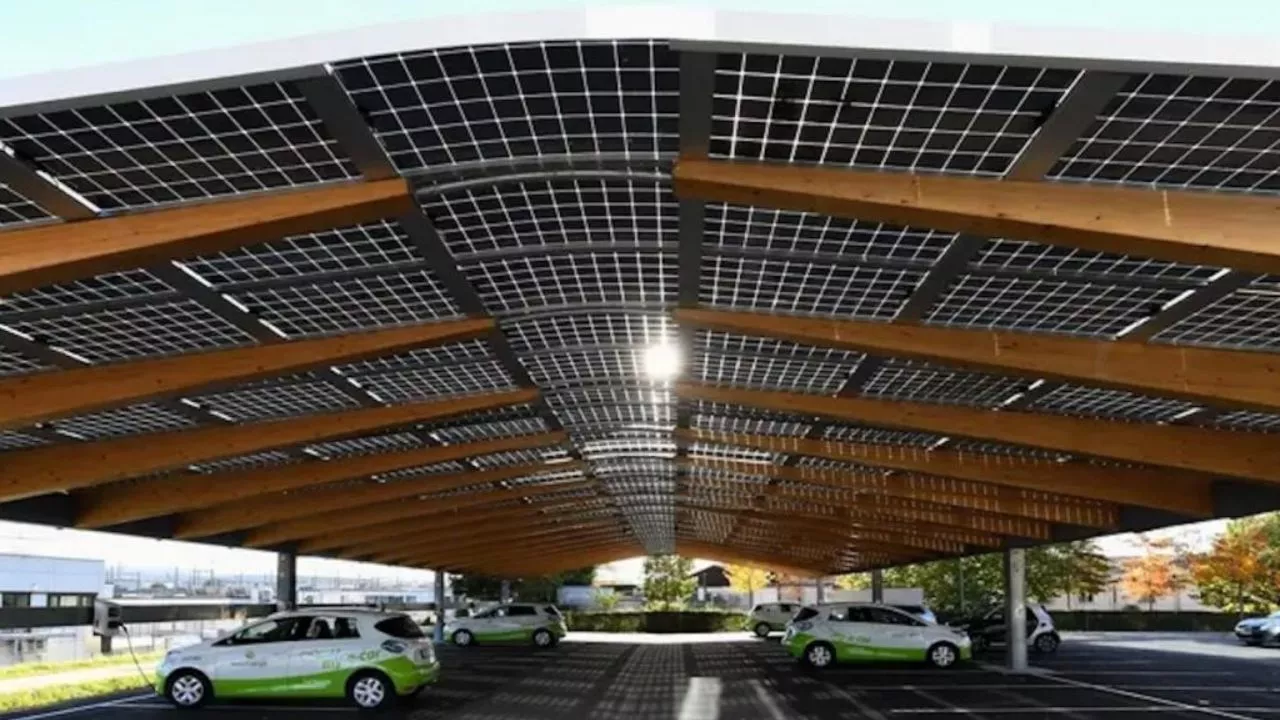
German manufacturer Solarwatt has added a new Solarwatt BIPV module to its Construct range. Called the Panel vision M 5.0 construct, it pairs bifacial TOPCon half-cut cells with tougher glass and a reinforced frame. As a result, it aims at projects where solar panels are part of the building itself, such as carports, parking canopies and facades. More importantly, it arrives with German general building approval, which can save planners a lot of paperwork.
What the New Solarwatt BIPV Module Offers
The Panel vision M 5.0 construct is a glass-glass module built for building-integrated photovoltaics (BIPV). According to Solarwatt, it delivers up to 227 W/m². That is more than 20% higher than the company’s previous generation. However, Solarwatt has not yet published a full datasheet, so details such as exact dimensions and temperature coefficients are still unknown.
Key highlights include:
- Bifacial TOPCon (tunnel oxide passivated contact) half-cut cells
- Power density of up to 227 W/m²
- 3.2 mm glass panes on a reinforced frame
- Claimed high resistance to hail, snow and wind loads
- 30-year product warranty with at least 90% output after 30 years
Why German Building Approval (abZ) Matters
In Germany, overhead glazing and facade systems face strict building rules. For this reason, BIPV projects often need extra approvals before work can start. The new module holds the general building authority approval, known as abZ, issued by the German Institute for Construction Technology (DIBt).
In practice, this means the main regulatory checks are already done. Consequently, contractors, architects and installers can plan with more certainty and fewer delays. Solarwatt has held this approval for several of its BIPV products since 2020. Over that period, it says it has supplied around 33 MW of abZ-certified modules to European projects.
TOPCon vs. PERC: How It Compares to the Older Model
The biggest change is the cell technology. The earlier Panel vision GM 3.0 construct used bifacial PERC cells, with module efficiencies between 19.4% and 19.9%. In contrast, the new model switches to TOPCon, a newer cell design that the industry widely uses to push efficiency higher.
| Feature | Panel vision GM 3.0 construct | Panel vision M 5.0 construct |
|---|---|---|
| Cell technology | Bifacial PERC | Bifacial TOPCon, half-cut |
| Performance | 19.4%–19.9% module efficiency | Up to 227 W/m² |
| Glass thickness | 2 mm | 3.2 mm |
| Frame | Standard | Reinforced |
| Building approval (Germany) | abZ | abZ |
| Warranty | 30-year product (glass-glass range) | 30 years, ≥90% output after 30 years |
Built for Harsh Weather and Tall Buildings
Thicker glass is more than a spec-sheet detail. Moving from 2 mm to 3.2 mm glass, together with the stronger frame, improves resistance to heavy snow and strong wind. Therefore, Solarwatt positions the module for alpine regions and high-rise facades, where loads are much higher than on a typical roof.
Bifacial cells also suit open structures well. On a carport, for example, light bouncing off the ground can reach the rear side of the panel. In addition, the glass-glass build gives the module a clean look that fits modern architecture.
Where the Solarwatt BIPV Module Fits Best
Solarwatt names several target uses for the new panel:
- Carports and parking canopies
- Building facades, including tall structures
- Selected green roof installations
- Overhead glazing where building approval is required
The module can be ordered by installation partners through the Solarwatt Pro portal. So far, the company has not shared public pricing.
Is This a Meaningful Step for BIPV?
From a practical standpoint, BIPV has often been held back by red tape rather than technology. Here, Solarwatt combines a clear efficiency jump with a building approval that removes much of that friction. Even so, buyers should wait for the full datasheet before comparing it closely with rival products. For now, it looks like a solid upgrade for German and European projects where durability and compliance matter as much as output.