 NK Mehta
Some inventions start in laboratories. The stump-jump plough started with a broken tool in a South Australian paddock. This November marks 150 years since Richard Bowyer Smith and his brother Clarence first showed their idea to farmers. At the time, critics laughed. Today, historians count it among Australia’s most important farming inventions.
The Problem Mallee Farmers Couldn’t Solve
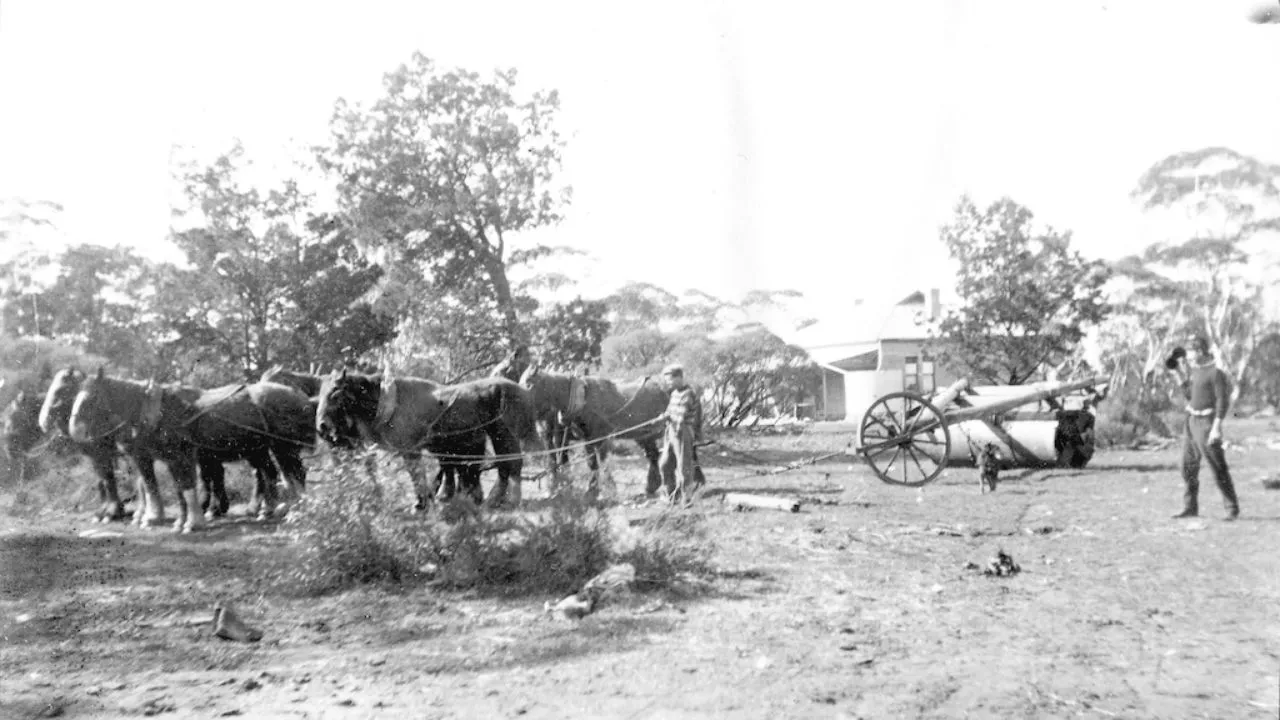
Before 1876, Mallee country was a farmer’s nightmare. Settlers could knock down the scrub with heavy horse-drawn rollers or clear it with fire. However, the tough roots and stumps stayed firmly in the ground. As a result, rigid ploughs snapped, bent or jammed whenever they struck hidden timber.
Pulling every stump by hand was slow and costly. Consequently, many people who bought scrubland simply gave it up. Records from the 1870s show that most leased Mallee blocks were forfeited because they were almost impossible to crop.
A Broken Plough Sparks a Big Idea
Richard Smith was a London-born blacksmith and farmer working near Port Wakefield. One day, part of his plough broke while he was working the land. Instead of seeing only a repair job, he noticed something useful. If the ploughshare could move up and down, it could ride over obstacles rather than smash into them.
Together with Clarence, he refined a working prototype. The brothers then unveiled it at the Moonta Agricultural Show on 6 November 1876. Even so, the response was mixed. Some visitors loved it, while others thought it encouraged lazy farming. Richard, though, stayed confident that his plough would open a new era for South Australian agriculture.
How the Stump-Jump Plough Works
The design was clever because it was simple. Here is what made it different:
- Hinged shares: Each blade was joined to the frame with a hinge instead of a fixed bolt.
- Weight system: Weights pushed the blade back into the soil after it lifted.
- Obstacle clearance: When a share hit a stump or stone, it rose over it and dropped back down.
- Less damage: Farmers no longer needed to remove every root before tilling.
From Ridicule to a Thriving Ardrossan Factory
Despite early doubts, the stump-jump plough quickly proved its worth. In 1880, Clarence opened a factory at Ardrossan on the Yorke Peninsula. At its peak, the business employed up to 130 people. Moreover, it sold ploughs across Australia and exported them to New Zealand.
Farmers praised the machine in company catalogues. One customer reported ploughing about 220 acres of rough, stony stump land in a single season. Remarkably, he said four horses handled it easily and nothing bent or broke. The factory kept trading until the Great Depression forced it to close in 1934. Today, a surviving part of the building houses the Ardrossan Heritage Museum, which holds early designs and catalogues.
| Year | Milestone |
|---|---|
| 1873 | 4,826 acres of scrubland leased; more than half later forfeited |
| 1874 | 2,183 acres taken up; all of it forfeited |
| 1876 | Stump-jump plough unveiled at the Moonta Agricultural Show |
| 1880 | Clarence Smith opens his plough factory in Ardrossan |
| 1881 | 285,670 acres of land purchased in a record colonial sale |
| 1882 | SA Government awards Richard Smith £500 for the invention |
| 1934 | Ardrossan factory closes during the Great Depression |
| 2026 | Plough featured in a Royal Australian Mint coin set |
How the Invention Unlocked Australia’s Farmland
The numbers tell a striking story. In an 1881 paper, the head of South Australia’s Royal Agricultural and Horticultural Society linked the plough to a huge rise in farmed land. Once settlers could crop scrub country, they stopped abandoning their blocks. In fact, the colony recorded its largest-ever land sale that year.
Sadly, the inventor did not grow rich. Richard’s patent lapsed, so others could copy his design freely. His relatives and neighbours had reportedly called him “a fool and a lunatic.” Later, the state government gave him £500 as recognition. Eventually, the brothers fell out, and Richard moved to Western Australia.
The Stump-Jump Plough’s Legacy 150 Years On
Modern tillage equipment looks very different from those early horse-drawn machines. Nevertheless, the core principle lives on. Today’s tyned and disc implements still use break-back or trip systems, although hydraulics have largely replaced the old weights.
The anniversary has also brought national recognition. The Royal Australian Mint has included the stump-jump plough in a five-coin set celebrating Australian inventions. It sits alongside other homegrown ideas, such as the jaffle maker and the black box flight recorder. For the Yorke Peninsula community, it is a proud reminder that a small accident can reshape an entire nation’s farming.