 NK Mehta
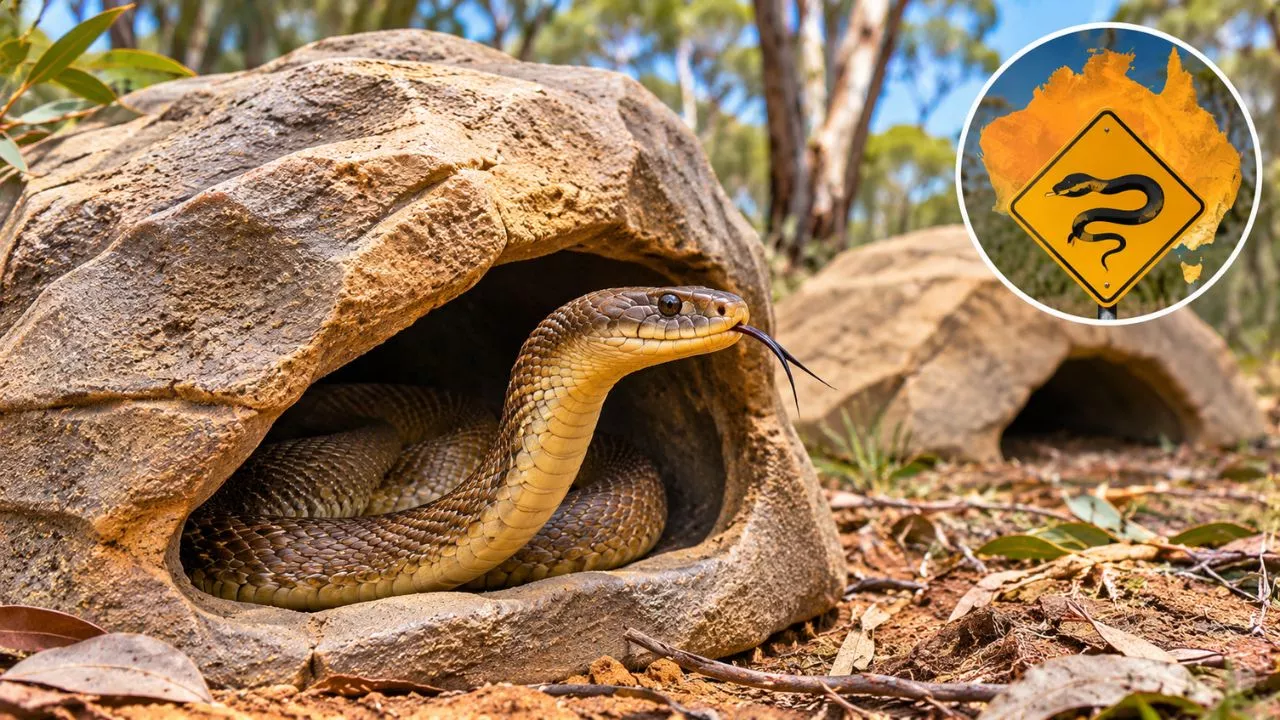
Australia’s broad-headed snake has been quietly disappearing for decades. Now, a small conservation win is giving scientists real hope. Four of six captive-bred juveniles released into the wild have survived their riskiest early months. Surprisingly, the secret behind this success is something simple: specially designed artificial rocks.
Meet the Broad-Headed Snake
The broad-headed snake (Hoplocephalus bungaroides) is a venomous reptile found in the Sydney Basin. It is easy to recognise by its bold yellow bands. Adults grow to nearly three feet long. In good conditions, they can live for up to 23 years.
However, this species has a slow life cycle. It only starts breeding at around five years old. Even then, females mate just once every two or three years. They also give birth to live young instead of laying eggs. As a result, the population recovers very slowly after any setback.
| Feature | Details |
|---|---|
| Scientific name | Hoplocephalus bungaroides |
| Native range | Sydney Basin, Australia |
| Adult length | Nearly 3 feet |
| Lifespan | Up to 23 years |
| Age at first breeding | Around 5 years |
| Breeding frequency (females) | Every 2–3 years |
| Activity pattern | Nocturnal |
| Main diet | Small reptiles such as skinks and geckos |
| Conservation status | Endangered |
Why the Broad-Headed Snake Became So Rare
Decades ago, this snake was fairly common around Sydney. By the 1990s, though, sightings had become rare. Meanwhile, many other local snake species were holding steady. That contrast pushed researchers to dig deeper.
Several pressures have combined to push the species toward the edge:
- Droughts and wildfires that are growing more frequent across Australia
- Habitat loss from development and land clearing
- Bush-rock removal, where natural rocks are taken and sold for landscaping
- Predators, including kookaburras, brown snakes, feral cats and foxes
Bush-rock collection is especially harmful. Young snakes depend on these rocks for shelter and for hunting. Yet attractive boulders can still sell for hundreds of dollars at landscape suppliers. In other words, there is a strong financial reason for people to keep taking them.
How Fake Rocks Are Helping Snakes Survive
Ecologists at the University of Technology Sydney led the project. They partnered with the conservation group Aussie Ark and Traditional Owners of the Shoalhaven region. Since 2024, the team has bred eight broad-headed snakes in captivity.
Two snakes were kept back to protect the breeding line’s genetics. The other six were released at restoration sites in May. Instead of leaving them exposed, researchers placed each juvenile beneath a custom-made artificial rock.
These rocks were not random. Each one was designed with carefully measured crevices. Importantly, they also copy the heat-holding properties of natural stone. Because the snakes are active at night, they hide under rocks during the day. There, they stay warm, avoid predators and wait for prey to come close.
What the Early Results Mean for Conservation
Releasing captive-bred animals is always risky. Young snakes are an easy meal in their first few months outdoors. That is why a survival rate of four out of six is so encouraging.
Still, this is only the beginning. The species breeds slowly, so recovery will take years. Even so, the team now hopes to expand the program to other parts of Australia. If it works on a larger scale, the approach could become a model for protecting other threatened reptiles.
Key Takeaways
- Four of six released juveniles survived their most dangerous period
- Artificial rocks gave them shelter, warmth and hunting spots
- Bush-rock removal remains a serious threat to wild populations
- Scientists plan to breed and release more snakes in future
Frequently Asked Questions
Is the broad-headed snake venomous?
Yes. It is a venomous species, but it is shy and rarely seen by people.
Where does the broad-headed snake live?
It is found in the Sydney Basin in New South Wales, Australia, mainly in rocky sandstone areas.
Why are fake rocks used in this program?
They give young snakes safe shelter and warmth. They also attract the small lizards the snakes eat.
How can people help protect this snake?
Avoid buying bush rocks taken from natural areas. Leaving rocks in place protects the habitat these snakes need.