 NK Mehta
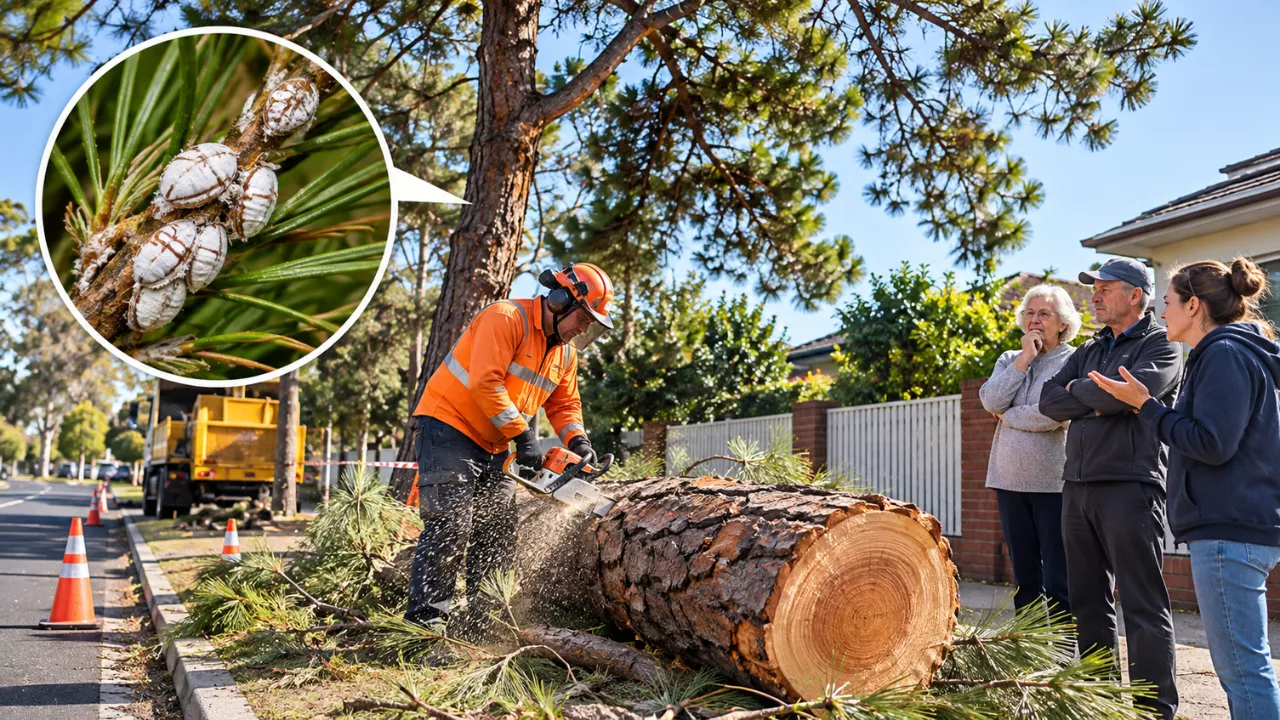
For years, tall pine trees shaded the hills behind homes in Highbury and Hope Valley. Today, many of those slopes are bare. The reason is a tiny invasive insect called giant pine scale. To stop it spreading, authorities have removed almost 5,000 pine trees across Adelaide’s north-eastern suburbs. However, many locals now say the cure has come at a high price.
What Is Giant Pine Scale?
Giant pine scale is a sap-sucking insect that attacks pine trees. It feeds on the tree’s sap and slowly drains it of moisture and nutrients. Over time, the tree weakens and dies. Infested trees often show a white, cotton-like waxy coating on the bark, which is one of the easiest signs to spot.
The pest is not native to Australia. In fact, it originally comes from the Mediterranean region. Because local pines have no natural defence against it, the insect poses a serious risk to urban trees and to South Australia’s valuable plantation forestry industry.
Why Authorities Are Removing Pine Trees
According to the South Australian Government, removing infected trees is currently the only scientifically agreed way to manage the outbreak. Crews also cut down healthy but susceptible pines nearby. This creates a buffer that makes it harder for the insect to move to new trees.
ForestrySA chief executive Nathan Paine has confirmed that 19 more infested trees were recently found at Highbury and Hope Valley. As a result, those trees are being felled, along with others inside a 50-metre buffer zone. Work is taking place around the reservoir, the aqueduct and along Lyons Road. Mr Paine was blunt about the outlook: “once the tree is infected it will die.” He also expects more detections in the future.
Key Facts About the Giant Pine Scale Response
| Detail | Information |
|---|---|
| Pest | Giant pine scale (invasive sap-sucking insect) |
| Affected suburbs | Highbury, Hope Valley and nearby north-eastern suburbs |
| Trees removed so far | Almost 5,000 |
| Latest detections | 19 more infested trees |
| Buffer zone | 50 metres around each infected tree |
| Government spending on response (since 2023) | $5.4 million |
| Funding for revegetation and restoration | $5.5 million |
| Replacement plan | Native species not susceptible to the pest |
How Residents Say the Tree Removal Has Changed Their Lives
For many locals, the loss is personal. Highbury resident Simon Roocke says the trees behind his home were a big part of why his family loved the area. They came down just before winter. Now his house backs onto a mostly cleared hill, and he says the landscape looks worse for it.
Beyond appearance, there are practical worries too. For example, Mr Roocke says residents raised concerns about the stability of the hillside once the roots were gone. He also noticed his home getting hotter. His daughter’s back bedroom warmed up within weeks, so the family expects to use more air-conditioning.
Further along the cleared area, Greg Atkins describes parts of the neighbourhood as barren. Residents were told thousands of plants would go in as part of the revegetation work. Yet he feels the planting stopped short behind his property. He hopes the government keeps going. Otherwise, he fears the slope will become a weedy, empty hillside.
Common concerns raised by residents include:
- Loss of shade and hotter homes in summer
- Hillside stability after mature trees and roots were removed
- Uneven replanting, with some areas still bare
- A changed neighbourhood character that affects how people feel about living there
Impact of Giant Pine Scale Clearing on Local Wildlife
The removals have also raised questions about wildlife. Community advocate Sonia Blackwell says mature pines gave shelter to many animals. These include red-tailed black cockatoos and koalas, which used the trees for habitat and protection from the weather.
Ms Blackwell says she is outraged by how the outbreak has been managed. She claims some residents are selling their homes. Meanwhile, she says displaced wildlife is moving into backyards. In one case, she says a resident had three snakes removed from her yard in a single week.
What Happens Next for Adelaide’s Cleared Hills?
The state government acknowledges that losing mature trees has a significant impact on local communities. Even so, it says these measures are critical to reduce the risk of further spread. Since 2023, it has put $5.4 million into the giant pine scale response. In addition, it has committed $5.5 million to revegetation and restoration.
Going forward, the removed pines will be replaced with native species that the pest cannot attack. In the long run, this should create a more resilient landscape. In the short term, though, residents face years of waiting for new plants to grow into the shade and habitat they lost.
Frequently Asked Questions
What is giant pine scale?
Giant pine scale is an invasive insect that sucks sap from pine trees. It drains the tree of moisture and nutrients until the tree dies.
How many trees have been removed in Adelaide?
Almost 5,000 pine trees have been removed across Adelaide’s north-eastern suburbs, including Highbury and Hope Valley.
Why are healthy pine trees being cut down too?
Authorities remove susceptible trees within a 50-metre buffer of infected ones. This helps stop the insect spreading to new trees.
What will replace the removed pine trees?
The government plans to replant the cleared areas with native species that are not vulnerable to giant pine scale.